Close

EXP REAL ESTATE AGENCY
Real Estate Agency
1111, boul. Dr.-Frederick-Philips #601,
Saint-Laurent QC H4M 2X6

BEAU THE REAL ESTATE TEAM
Office
5125, chemin du Parc, apt. 333,
Orford QC J1X 7N9

Owl’s Head: The Story of the Mountain, From the Mountain House to Today

Owl’s Head is a mountain of about 750 metres that drops straight into Lake Memphremagog, in the Township of Potton, in Quebec’s Eastern Townships. In the 19th century, visitors arrived by steamboat to stay at the Mountain House hotel. In 1965, Fred Korman opened a ski resort there. In 2018, a group of Quebec investors bought it and has since invested more than $35 million.

Here is the story of the mountain, what it has become, and what it means if you want to buy or sell a property there.

By Yanick Beaupertuis, residential and commercial real estate broker · Updated November 20, 2026 · 12-minute read

Talk about Owl’s Head with YanickText Yanick

Owl’s Head in 10 dates

  1. Mid-19th centuryA first hotel rises at the foot of the mountain, on the lakeshore.
  2. 1855It burns down. A larger hotel replaces it: the Mountain House.
  3. 1867The steamboat Lady of the Lake enters service and docks at the foot of Owl’s Head.
  4. October 11, 1899The Mountain House burns down in turn. It is never rebuilt.
  5. 1925 to 1968Summer camps occupy the shore: boys, then girls, then the United Church.
  6. December 18, 1965Fred Korman opens the ski resort.
  7. 1992The 18-hole Graham Cooke golf course opens.
  8. March 28, 2018The Korman family sells the resort to Destination Owl’s Head.
  9. August 3, 2020The Township of Potton approves the master plan, with conditions: at most 500 homes over 10 years.
  10. March 2026The resort turns 60, with more than $35 million invested in skiing and golf since 2018.

Where does the name Owl’s Head come from?

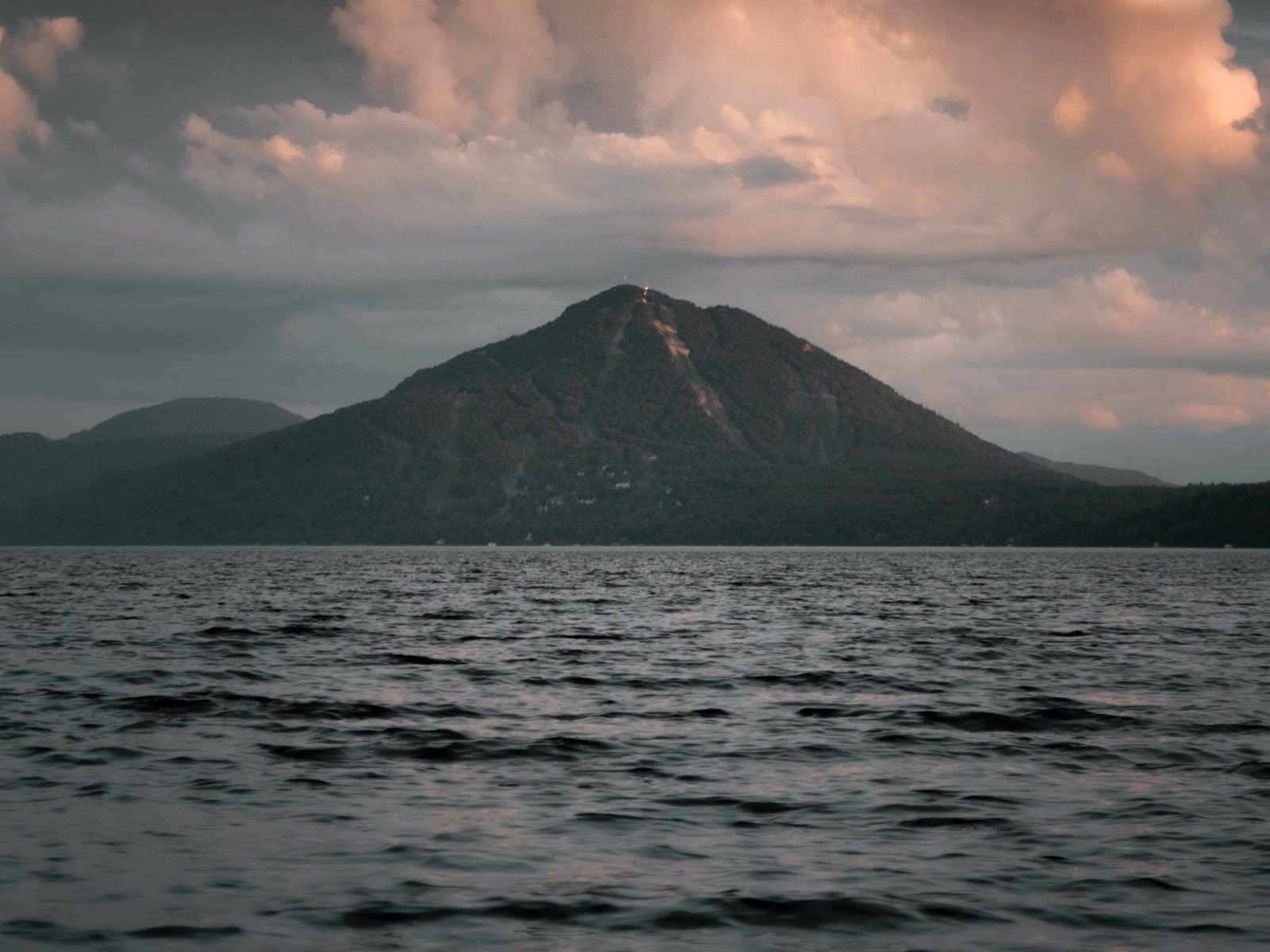
Seen from the lake, the summit looks like an owl’s head. The Abenaki name recorded by the Commission de toponymie du Québec, Wal8ïmdepsek, means exactly that: “owl’s head.”

An oral tradition says the Abenaki saw in the mountain’s profile the face of their chief, named Owl. The Potton Heritage Association points out that the legend is a lovely one, but impossible to verify.

The mountain is of volcanic origin. Its summit rises to about 750 metres, and the ski area offers a 540-metre vertical drop, among the largest in Quebec.

It inspired artists early on: Cornelius Krieghoff painted it in 1859. Two years earlier, Freemasons from Stanstead had set up an open-air lodge near the summit, where they gathered at the summer solstice.
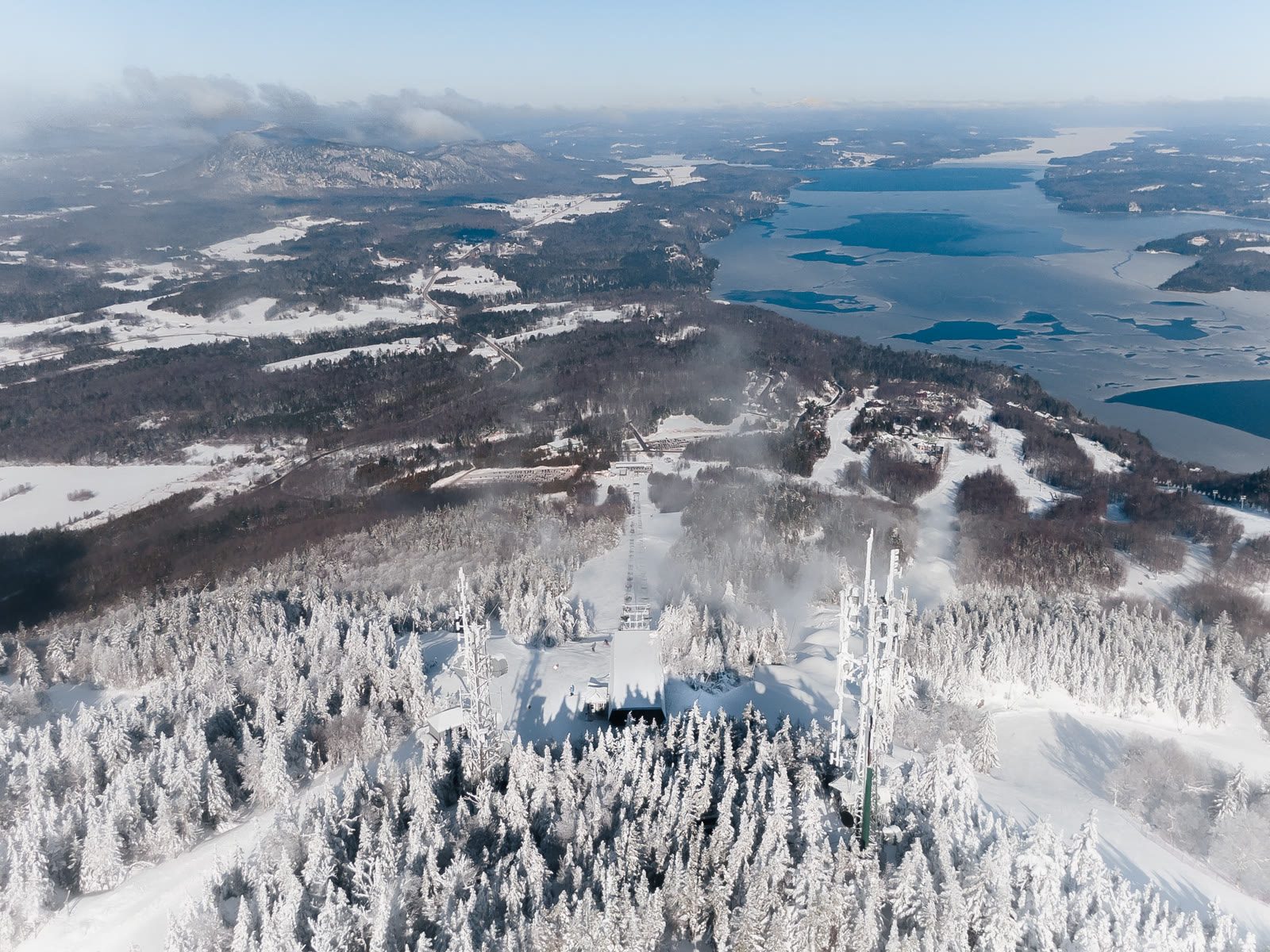
Winter view from the summit of Owl’s Head over Lake Memphremagog and the Eastern Townships
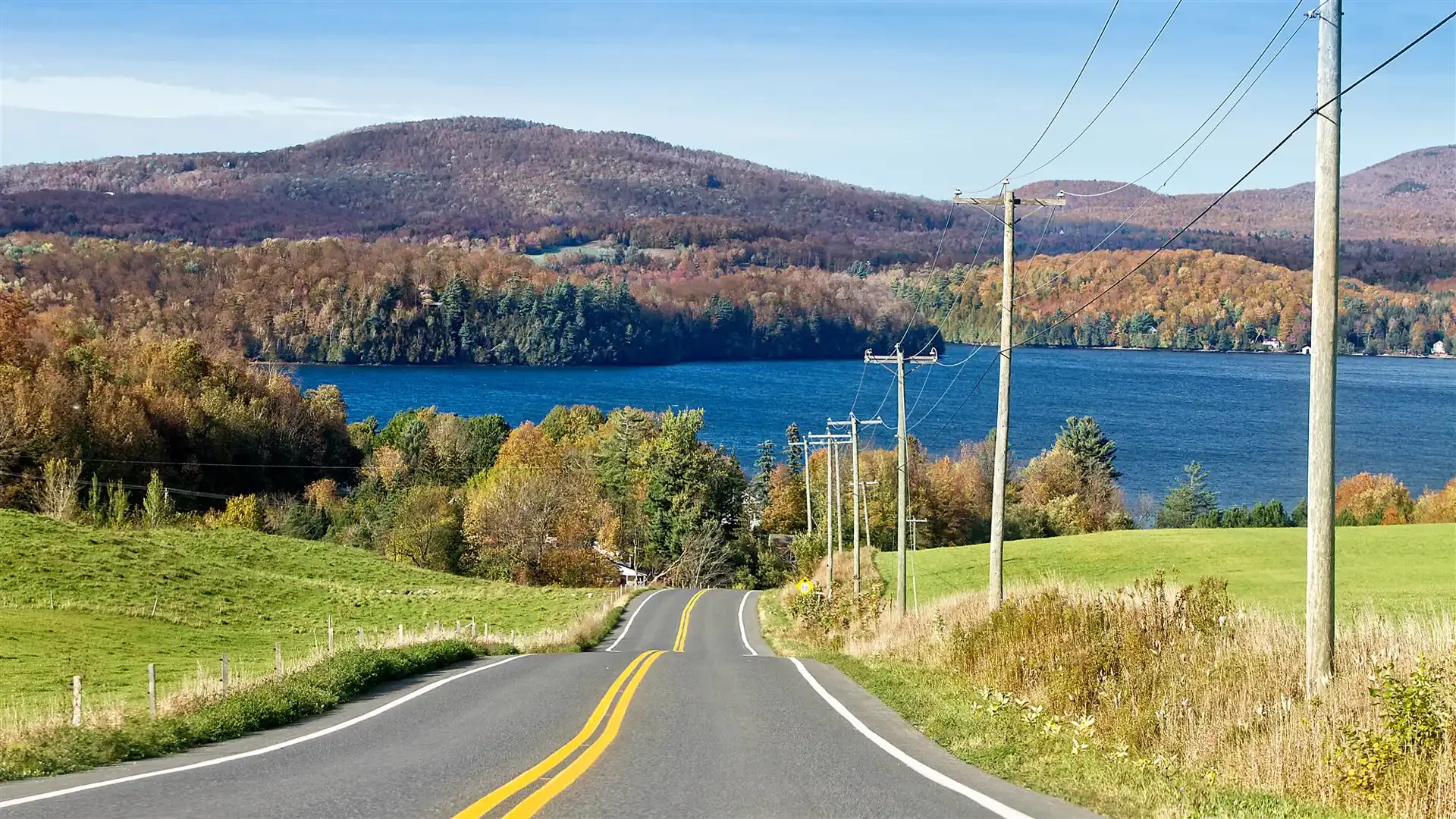
From the summit of Owl’s Head, Lake Memphremagog stretches toward Vermont.

What was the Mountain House, the lost hotel of Owl’s Head?

The Mountain House was a resort hotel of about 75 rooms, built on the shore of Lake Memphremagog at the foot of the south slope. It welcomed guests until it burned down in 1899.

In the mid-19th century, there was no road to Owl’s Head. You came by water. The steamboats Mountain Maid, the first on the lake, launched in 1850, and later Lady of the Lake, in 1867, dropped visitors off on a point at the foot of the south slope.

A first hotel was built there and burned in 1855. Historians disagree about who built it. A larger one replaced it: the Mountain House, on an estate of more than 500 acres, with running water brought down from the mountain by gravity.

The hotel became a sought-after address. The English novelist Anthony Trollope stayed there in 1861 and wrote in North America (1862) that he had been better lodged there than at any other inn in Lower Canada. The photographer William Notman made pictures of the mountain.

On October 11, 1899, around 9 a.m., a worker heated tar on the kitchen stove to repair the roof. Within an hour, the hotel and its annex were gone.

The account comes from the Stanstead Journal of the time, preserved by the Potton Heritage Association. The Mountain House was never rebuilt.

More than a century later, the Owl’s Head ski lodge is called MTN Haus, a name that reads like the old hotel’s. Whether it is a deliberate nod, no record says. Renovated in 2018 and 2019, the lodge has 10 suites on its top floor, which became the Hôtel du Hibou in 2025.

What was at Owl’s Head before the ski resort?

Before the resort, the shore at the foot of the mountain was home to summer camps for more than 40 years, from 1925 to 1968. Their land later became the Owl’s Head marina.

From 1925 to 1936, Colonel F. B. Edwards, of Northfield, Vermont, ran the Owl’s Head Camp for Boys.

In 1937, Daisy L. Gass bought the camp and founded the Memphremagog Camp for Girls, known to everyone as the Girls’ Camp. It ran until 1960. The United Church of Canada then held Upward Trail Camp there until 1967 or 1968, depending on the source.

When it closed, the Korman family’s company acquired the land, which would become the marina. Girl’s Camp Road, which leads there, keeps the memory alive: the Municipality adopted the name in 1991.

Who founded the Owl’s Head ski resort?

Fred Korman, an electrician from Mansonville, founded the Owl’s Head ski resort and opened it on December 18, 1965. His family ran it until 2018.

Fred Korman was born in Mansonville into a family of market gardeners. As a young electrician, he helped his father wire businesses and homes across the area in the late 1940s. In 1958, he co-founded Mansonville Plastics with his father and brother.

In the 1960s, he and his family acquired the land at the foot of the mountain. On opening day, the resort had two chairlifts, a T-bar and six runs laid out by Bob Richardson, an Olympic skier born in Magog. A plaque in his memory stands at the top of the chairlift. Three generations of Richardsons have worked at the resort.

That same year, Fred Korman became mayor of the Township of Potton, a post he held until 1969. He is also credited with saving the Province Hill covered bridge, built in 1896.
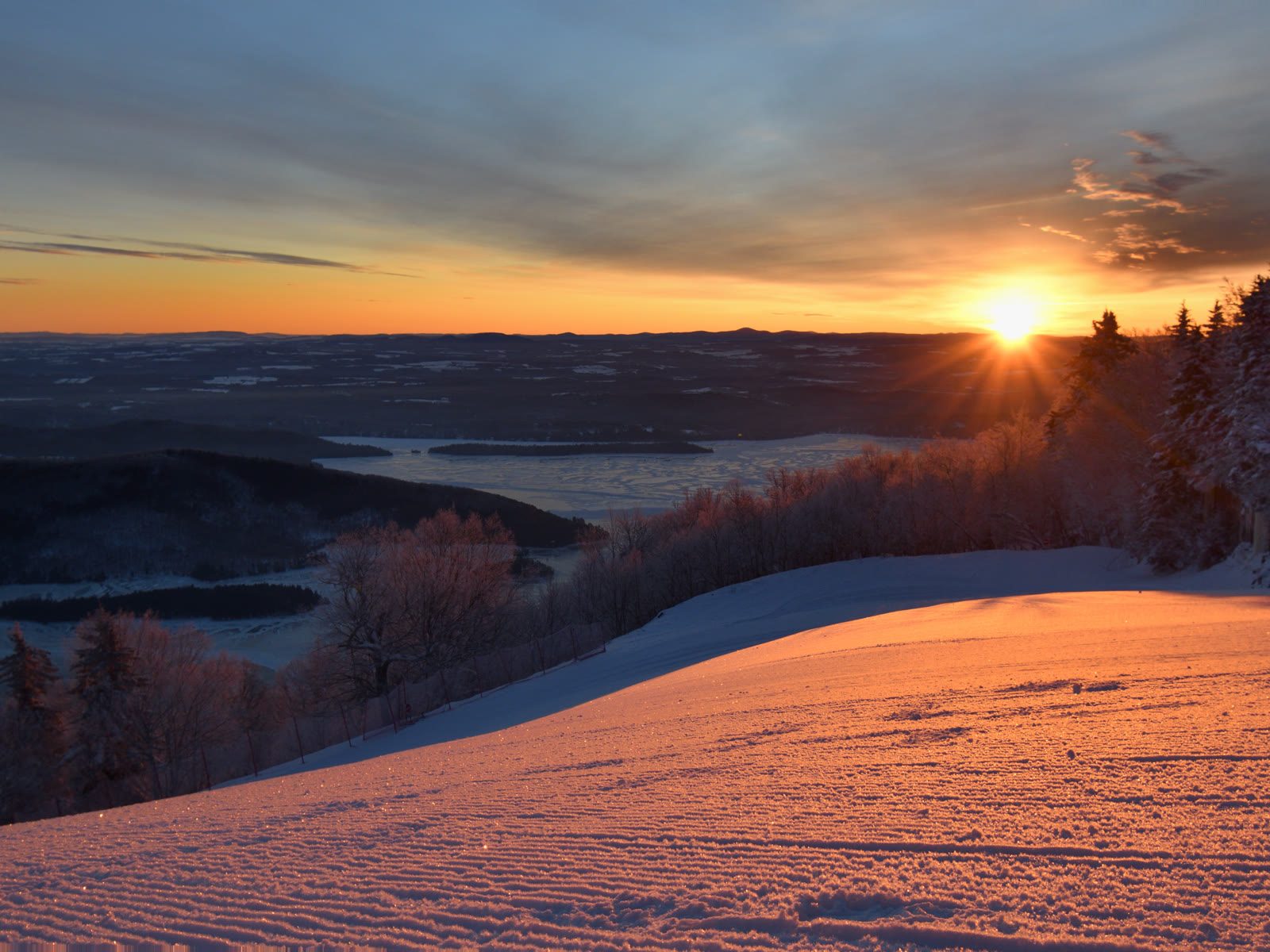
Sunrise on a snow-covered run at Owl’s Head, with Lake Memphremagog below
First tracks of the morning at Owl’s Head.

How did Owl’s Head grow under the Korman family?

For more than half a century, the Korman family grew the resort without a partner: modern lifts, an 18-hole golf course, a marina and lodging.

In the late 1980s, the Sommet detachable chairlift, by Doppelmayr, began climbing 1,100 metres. In 1999, a detachable quad arrived from Breckenridge, Colorado, to serve the lake side of the mountain.

Summer found its place too. The 18-hole, par-72, 6,568-yard golf course designed by Graham Cooke opened in 1992 at the foot of the slopes.

Around 2000, Owl’s Head had a marina open to the public, with water and electricity at the dock, a 36-unit condo hotel and a 20-room inn. The resort welcomed up to 125,000 skiers a winter.

In 2015, for its 50th anniversary, Owl’s Head covered about 1,300 acres, with 200 lodging units, a private beach, 75 year-round jobs, 100,000 skiers and 24,000 golfers a year. At 86, Fred Korman was still running it seven days a week, according to Le Reflet du Lac.

Who bought Owl’s Head in 2018?

On March 28, 2018, the Korman family sold the resort to Destination Owl’s Head, a group of Quebec investors, for $16.1 million.

In August 2017, the Korman family signed an agreement with Sommet Memphrémagog, Gilles Bélanger’s company. The deed of sale was signed on March 28, 2018, and the new owners took possession on April 3.

The price: $16.1 million for the ski area, the golf course and 2.9 km² of land, according to Le Reflet du Lac.

The buyer, Destination Owl’s Head, brings together business people who almost all have a personal tie to the area:

  • Michael Zakuta, of Plazacorp;
  • Gilles Bélanger, who stepped back in June 2018 to run for office;
  • the Bensadoun family, of the Aldo Group;
  • Vincent Chiara, of Groupe Mach;
  • the Girardin family.

Pierre Bourdages became president and CEO. Vincent Chiara summed up the group’s motivation to the magazine Les Affaires: protecting the backyard of their own country homes.

Their initial promise: more than $200 million and 150 jobs over 10 to 15 years. On August 3, 2018, the Quebec government announced its support for a project worth nearly $162 million, with financial assistance of up to $20.4 million.

How much has been invested at Owl’s Head since 2018?

More than $35 million was invested in skiing and golf at Owl’s Head from 2018 to 2026, according to the resort’s management.

The first 18 months set the tone: nearly $26 million, according to the master plan summary published by the Township of Potton.

$9.0Msnowmaking
$6.0MMTN Haus ski lodge
$5.1MLac chairlift and loading carpet
$1.3Mnew marina

The rest went to grooming machines, the golf course, IT, mountain work and the Club Lac. In the fall of 2019, a helicopter set the towers of the new Lac chairlift: a 900-metre Doppelmayr quad that carries 2,200 skiers an hour.

In March 2026, for the resort’s 60th anniversary, Owl’s Head had 275 jobs, according to its president.

The community benefits too. A 2021 agreement provides $800,000 over 15 years for Potton’s parks and the transfer of trails around the golf course. In 2025, the Quebec government granted $350,000 to link Mansonville and Owl’s Head by trail.

Why can Owl’s Head ski even when it doesn’t snow?

Because more than 300 snow guns, fed by water from Lake Memphremagog, cover 90% of the ski area and start working at −2.5 °C wet-bulb temperature.

On November 18, 2026, the weather was mild and the mountain was still green. Skiers had nothing to worry about, and here is why.

Machine-made snow is nothing artificial. It is water, air and cold: 1 m³ of water makes about 2.5 m³ of snow, according to the manufacturer TechnoAlpin. The guns start at −2.5 °C wet-bulb temperature, a measure that combines air temperature and humidity.

  • More than $14 million invested in snowmaking since 2018.
  • More than 300 snow guns cover 90% of the ski area, or 110 acres.
  • 16 km of water and air lines replaced as early as 2018 (TechnoAlpin).
  • The water comes from Lake Memphremagog. In 2022, more than $3.5 million went into a new pumping station and a deeper water intake, for more than 30% more output in cold weather.

The first cold snap is enough: within a few nights, the slopes turn white, even without a single snowfall.

How does the Owl’s Head marina work?

The Owl’s Head marina, on Lake Memphremagog, is reserved for members. The Club Lac, with its pool and private beach, is reserved for residents.

Owl’s Head is one of the few mountains in Quebec that runs right down to a large lake. The marina, on the former summer camp land, was rebuilt after 2018 ($1.3 million), as was the Club Lac ($0.5 million).

The 2020 master plan called for 83 boat slips. The Club Lac pool is an infinity pool.

One rule partly explains the value of a slip on this lake: since 1998, the land use plan of the Memphrémagog RCM has prohibited any new multi-slip dock and any new marina, as Memphrémagog Conservation points out.

Before buying, get it in writing: what comes with the property? A boat slip, a right of first refusal, a Club Lac membership? Each right has its own rules and fees, often paid by the buyer.
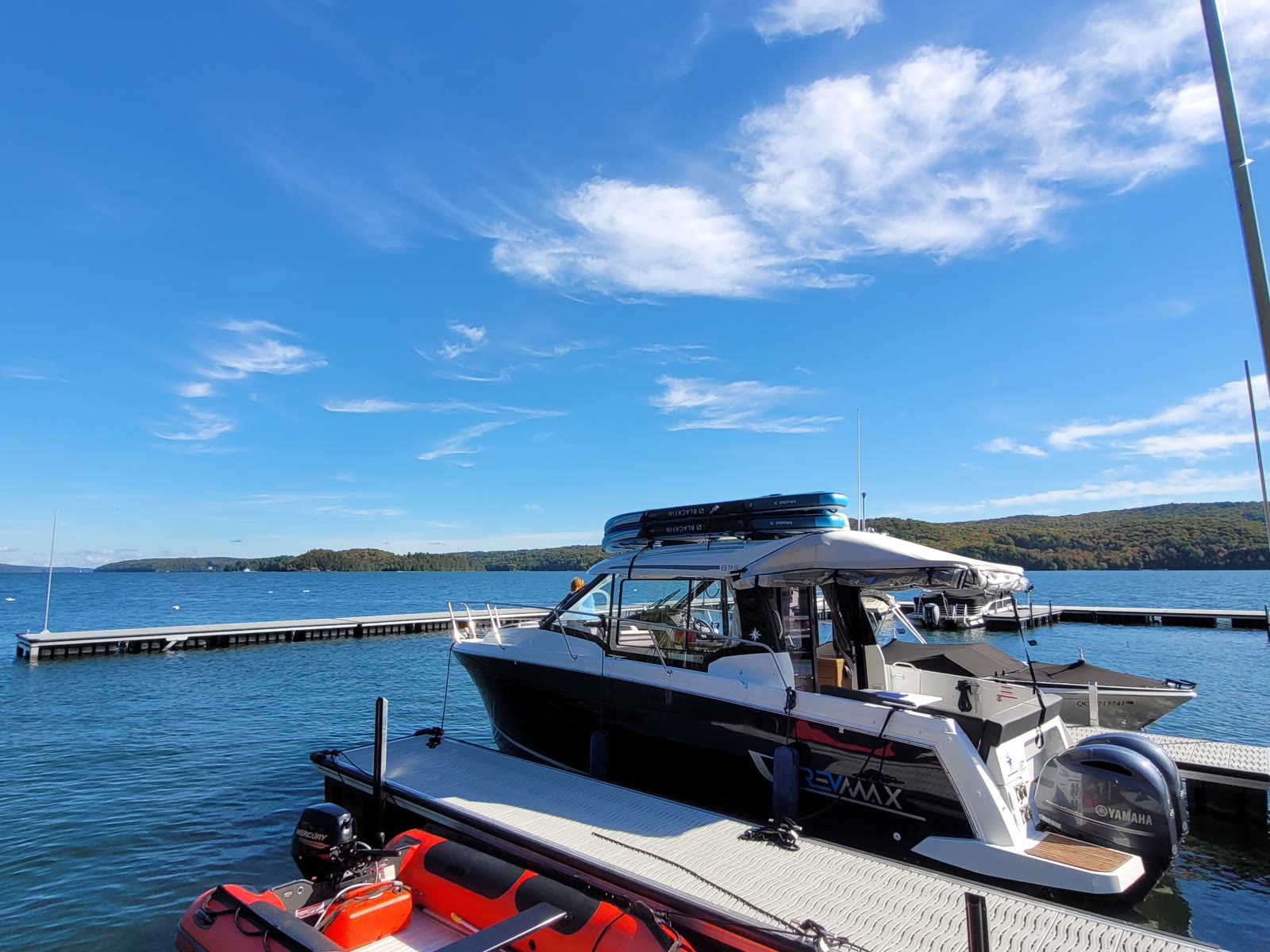
Boat moored at a dock on Lake Memphremagog, near Owl’s Head
In summer, life at Owl’s Head happens on the water too.

What does the Owl’s Head development plan include?

The master plan approved by the Township of Potton in 2020 provides for at most 500 homes over 10 years, a hotel of about 100 rooms and a spa, with no commercial village.

The Memphrémagog RCM recognizes Owl’s Head as a natural landscape of superior interest. You cannot build just anything there: development goes through a comprehensive development plan (PAE), submitted to the Township of Potton.

After public consultations in the spring of 2020, the Township approved the master plan on August 3, 2020, with conditions, for a total of about $160 million.

Destination Owl’s Head also committed to protecting the character of the mountain:

  • no building larger than Glaz 1, about 24 units on 3 storeys;
  • no residence above 386 metres of elevation;
  • no chalet on the summit and no hotel on the lakeshore;
  • no commercial village competing with the shops of Mansonville.

Eight years after the sale, about a hundred homes have been built, according to Le Reflet du Lac: the Glaz alpine condos, the Maisons Renard, the Villas du lac and the Knox lots. Next come the L’Érablière lots and the Le Boisé townhouses, near the family chairlift. Eventually, a hotel and a restaurant near the slopes are planned.

The Township of Potton is also revising its urban plan and bylaws, a process launched in 2025.
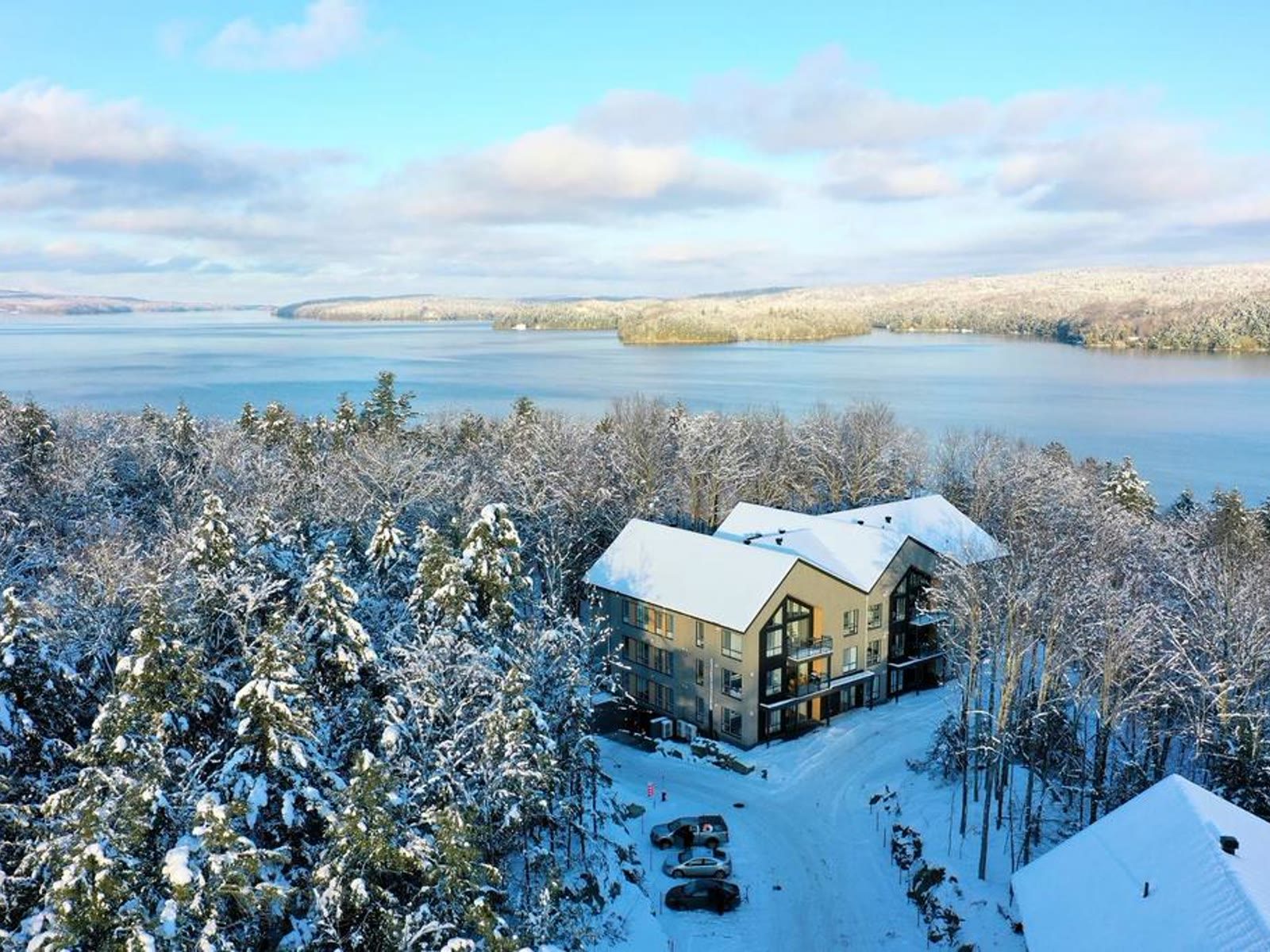
Winter aerial view of the Glaz alpine condos at the foot of the Owl’s Head slopes, with Lake Memphremagog
The Glaz alpine condos, at the foot of the slopes.

How much does a property cost at Owl’s Head?

In Potton, where Owl’s Head is located, the median price of a single-family home was $741,687 over the 12 months ending in the third quarter of 2026, according to the QPAREB. It is a small market, where every sale counts.

$741,687median single-family price in Potton over 12 months
62 daysaverage selling time for a single-family home
63 salesresidential sales in 12 months, including 55 houses
7 condossold in 12 months: each one is assessed case by case

Source: QPAREB through the Centris system, Potton, four quarters ending in Q3 2026, consulted October 20, 2026. These statistics describe the market as a whole, not the value of any particular property.

Here, value comes down to details you won’t find on a listing: true ski-in, ski-out access or not; the lake view; sun exposure; marina and Club Lac rights; short-term rental rules; winter access.

To go further: buying at Owl’s Head, what to check, living at Owl’s Head and a free evaluation of your property.

Owl’s Head: I watched it change from the inside

I started working on the mountain’s development in late 2016, as a consultant, during the due diligence and the business plan that came before the acquisition. I came with 25 years of hospitality and resort experience behind me.

After the sale, starting in 2018, I was director of real estate and resort development at Destination Owl’s Head. I worked on the master plan, the residential projects and the launch of the first alpine condos.

Today, I am a residential and commercial real estate broker with BEAU L’Équipe immobilière. I represent buyers and sellers on the mountain and around the lake.

I know every sector, every building, the history of each project and the rules that apply: condominium, rentals, marina, Club Lac, snowmaking, winter access. And I ski the mountain.

Want to visit Owl’s Head, understand a project or find out what your property is worth? Let’s talk. I answer personally, in English or French.

Yanick Beaupertuis, residential and commercial real estate broker

Transparency. I used to work for Destination Owl’s Head. Today, I am a broker independent of the mountain: I work for you, the buyer or the seller, not for the developer. I know Owl’s Head from the inside, its projects, its contracts and its people. My cordial relationship with the Destination Owl’s Head team makes your process simpler and faster: answers, documents, visits. If a business tie exists in your transaction, I disclose it to you in writing before any promise to purchase, and your brokerage contract always states who pays my remuneration.

Let’s talk about Owl’s Head

Visit the mountain and properties, meet in person, sell your property or just talk it over: choose what suits you. I answer personally, the same day in most cases.

Text YanickCall (514) 358-3126Book a time

Or leave me your details:

    Your details are used only to answer your request. Yanick answers personally, in English or French.

    Frequently asked questions about Owl’s Head

    When did the Owl’s Head ski resort open?

    The Owl’s Head ski resort opened on December 18, 1965. Its founder, Fred Korman, a native of Mansonville, ran it with his family until it was sold in 2018.

    Who owns Owl’s Head today?

    Since March 28, 2018, the resort has belonged to Destination Owl’s Head, a group of Quebec investors that includes Michael Zakuta, the Bensadoun family, Vincent Chiara and the Girardin family. Pierre Bourdages is its president and CEO.

    How much has been invested at Owl’s Head since 2018?

    More than $35 million in skiing and golf since 2018, according to management (March 2026), including more than $14 million in snowmaking. The master plan approved in 2020 provides for at most 500 homes over 10 years and a hotel of about 100 rooms.

    What was the Owl’s Head Mountain House?

    It was a resort hotel of about 75 rooms at the foot of the mountain, on the shore of Lake Memphremagog, served by steamboat. Rebuilt after a first fire in 1855, it burned down on October 11, 1899, and was never rebuilt.

    Why can Owl’s Head open without natural snow?

    More than 300 snow guns cover 90% of the ski area. They work from −2.5 °C wet-bulb temperature, using water pumped from Lake Memphremagog. One cubic metre of water makes about 2.5 cubic metres of snow.

    Can you get a boat slip at Owl’s Head?

    The Owl’s Head marina is reserved for members. A boat slip, a right of first refusal or a Club Lac membership each come with their own rules and fees: get it in writing, before the promise to purchase, what comes with the property.

    How high is Owl’s Head?

    The summit of Owl’s Head rises to about 750 metres, and the ski area offers a 540-metre vertical drop, according to the Quebec Ski Areas Association.

    Sources

    Updated November 20, 2026. Photos: BEAU L’Équipe immobilière.

    Yanick Beaupertuis, residential and commercial real estate broker · BEAU L’Équipe immobilière · eXp Agence immobilière.
    How to Choose a Real Estate Broker in the Eastern Townships

    To choose the right real estate broker in the Eastern Townships, start by checking their licence in the OACIQ register. Then look at their real knowledge of the area, their written marketing plan, their availability, how they are paid and what their clients say. Here are the 8 criteria that matter, the questions to ask when you meet, and the red flags.

    By Yanick Beaupertuis, residential and commercial real estate broker (OACIQ H4258), BEAU The Real Estate Team, Eastern Townships · Published November 18, 2026

    Why does your choice of broker matter so much in the Eastern Townships?

    The Eastern Townships market is varied: condos at the foot of the slopes, chalets, waterfront properties, farmland, plexes in Sherbrooke. Each type of property has its pitfalls: shoreline buffer strips and lake access, wells and septic systems, agricultural zoning, short-term rental rules that change from one municipality to the next.

    Buyers also come from far away: Montréal, the South Shore, Ontario, Europe. A broker who knows the ground and can reach those buyers, in French and in English, changes the outcome.

    The 8 criteria for choosing a broker

    Criterion What to check
    1. A valid licence An OACIQ licence in good standing, residential or commercial depending on your property, with no disciplinary action. Everything can be checked in the OACIQ register.
    2. Knowledge of the area Recent sales in your town, and the ability to explain the median price, time on market and market conditions, with figures.
    3. The right specialty Chalet, waterfront, land, mountain condo, plex or commercial: ask for concrete examples of properties like yours.
    4. A written marketing plan A proposed and justified price, photos and video, distribution (Centris, social media, newsletter), and a schedule for the first weeks.
    5. Availability Who answers you, and how quickly? Alone or as a team? In the evenings and on weekends, when buyers visit?
    6. Clear remuneration Remuneration is not set by law: it is negotiated and written into the brokerage contract, including the share offered to cooperating brokers.
    7. Verifiable reviews Read recent, detailed Google reviews: type of transaction, town, how problems were handled.
    8. Network and language Bilingual service and a network able to reach buyers from outside the region.

    What questions should you ask when you meet?

    • What is your licence number, and in which category (residential, commercial)?
    • What have you sold recently in my area, and at what price compared with the asking price?
    • Do you work alone or as a team? Who answers me if you are not available?
    • What is your plan for my property, week by week?
    • How are you paid, and what is included?
    • How do you justify the price you are proposing?
    • Can you show me examples of your marketing, and client reviews?
    • If something goes wrong, who is your agency’s executive officer?

    What are the red flags?

    • A promised price well above the market, without data, to win the contract.
    • Pressure to sign quickly, or vague answers about remuneration.
    • No recent market data on your area.
    • No verifiable reviews, or only unnamed testimonials.

    How BEAU meets these criteria

    BEAU The Real Estate Team is a team of brokers with eXp Agence immobilière, rooted in the Eastern Townships (office in Orford) and active across Québec. Everything below can be verified.

    • Licences: Yanick Beaupertuis (residential and commercial, H4258), Louka Groulx (residential and commercial, J2881) and Zachary Bonnard-Murphy (residential, J4693), in the OACIQ register.
    • Market data: a sourced report every month, such as the Eastern Townships vs Québec in October 2026 or the Q3 report for Magog.
    • Areas: Magog, Orford, Sherbrooke, Bromont, Eastman, Owl’s Head, Sutton, the whole Memphremagog area, and town guides.
    • Marketing: photos, videos, distribution on Centris, our social media and our newsletter, in French and in English.
    • Reviews: about fifty Google reviews, with an average rating of 5.0 (November 2026).

    The best test is still the meeting: ask us the questions on this page. Book a meeting with a BEAU broker, or request your free home evaluation.

    Frequently asked questions

    How do I check that a real estate broker holds a valid licence?

    Use the OACIQ’s “Check a broker’s record” tool (registre.oaciq.com). It shows the licence number and category (residential, commercial), the agency, the training completed and any disciplinary action.

    Is a real estate broker’s commission set by law in Québec?

    No. According to the OACIQ, remuneration is not set by the Real Estate Brokerage Act or any other law: it is negotiated with the broker (percentage, flat fee or hourly rate) and must be written into the brokerage contract.

    Is it better to choose a local broker or a big brand?

    Both matter. A local broker knows the areas, prices and local specifics (lakes, wells, agricultural zoning, short-term rentals), while the agency’s network helps reach buyers from outside the region. Ask about both when you meet.

    Who are BEAU’s brokers in the Eastern Townships?

    Yanick Beaupertuis (residential and commercial real estate broker, licence H4258), Louka Groulx (residential and commercial real estate broker, licence J2881) and Zachary Bonnard-Murphy (residential real estate broker, licence J4693), of BEAU The Real Estate Team, part of eXp Agence immobilière. Their licences can be checked in the OACIQ register.
    Sources

    Yanick Beaupertuis, residential and commercial real estate broker · BEAU The Real Estate Team · eXp Agence immobilière

    Sold Without a Legal Warranty: What It Means for You

    In 2026, 44% of residential sales in Québec close without a legal warranty of quality. In 2011, it was 12% (Centris, APCIQ data). Without a legal warranty, the buyer takes on the risk of hidden defects and loses most of their recourse. The seller, however, is not off the hook for everything: transparency remains their best protection. Here is what it changes on each side, and how to find your way.

    This article expands on Yanick Beaupertuis’s “5-cent tip” video about the legal warranty. Here it is (in French):

    By Yanick Beaupertuis, residential and commercial real estate broker (OACIQ H4258), BEAU The Real Estate Team, Eastern Townships · Published November 18, 2026

    What is the legal warranty of quality?

    In Québec, the law requires the seller of a property to guarantee the buyer that it is free of latent (hidden) defects (Civil Code of Québec, art. 1726). This is the legal warranty of quality. It applies automatically, even if the contract says nothing about it.

    A latent defect is a serious defect that existed before the sale, that the buyer did not know about, and that a prudent and diligent buyer could not have noticed without calling on an expert. A hidden foundation problem or concealed water infiltration are classic examples.

    What does “at the buyer’s own risk” mean?

    The parties can reduce or exclude the legal warranty in the promise to purchase (art. 1732). The most complete wording, “without legal warranty of quality, at the buyer’s own risk,” shifts almost all the risk of hidden defects onto the buyer’s shoulders.

    Québec’s Court of Appeal has clarified this in recent years (Blais v. Laforce, 2022, then Tremblay v. Immeubles Perron ltée): with this clause, a non-professional seller can even exclude liability for defects they knew about, unless there is fraud, meaning a deliberate intention to deceive the buyer (art. 1733). The seller’s silence alone is no longer enough to prove it.

    And it goes further: a buyer who completely waives the warranty also cannot turn to previous owners, even if those owners had sold with a warranty (OACIQ).

    Why are so many homes sold without a legal warranty?

    According to Centris, the trend is no longer explained by market conditions alone: many sellers choose this option to limit their future legal risk. Properties sold without a warranty do not sell more slowly, and the phenomenon is more pronounced in regions with an older population.

    The classic cases remain estates, repossessions, buildings to be demolished and changes of use: situations where the seller knows little or nothing about the property.

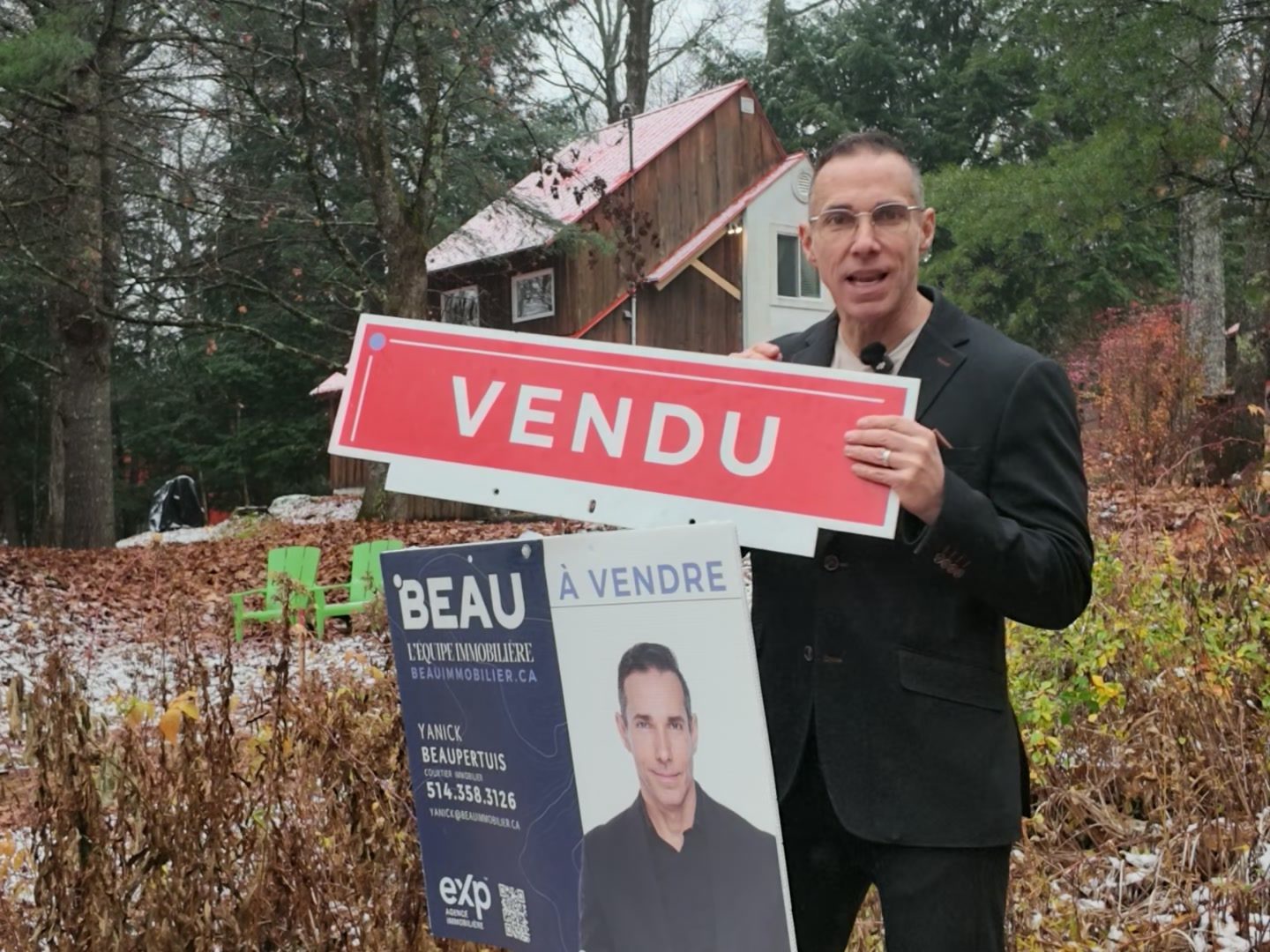
    Then there is the domino effect. The cottage behind Yanick in his video had itself been bought without a legal warranty: the clause was passed on to the next buyer. Bought without a warranty, resold without a warranty. That is how the share keeps climbing year after year.

    For the buyer: what changes?

    • Less recourse. If a hidden defect shows up after the purchase, your recourse against the seller is very limited: you would have to prove fraud.
    • Inspection becomes essential. Have the property inspected by a building inspector before you waive your conditions, and call in an expert at the slightest doubt (roof, foundation, well, septic system).
    • Put your questions in writing. Read the seller’s declaration closely. A seller who is asked should disclose the defects they know about: keep a record of their answers.
    • It is negotiable. Risk has a price. With supply rising (45,185 active listings in Québec in September 2026, 23% more than a year earlier, according to the APCIQ), the price, the conditions or a partial-only exclusion of the warranty are back on the negotiating table.

    For the seller: what changes?

    • A complete, detailed declaration. Even without a warranty, your best protection is transparency. An incomplete or inaccurate seller’s declaration opens the door to disputes.
    • A total exclusion is not always needed. The OACIQ recommends keeping it for exceptional situations: an estate, a repossession, a building to be demolished, a change of use. Otherwise, a partial exclusion (the immediate seller only, or certain components of the building) often offers enough protection.
    • A possible effect on price. An informed buyer will factor the risk they take on into their offer.
    • Limits. The exclusion does not cover certain damages, such as bodily injury caused by a hidden problem (mould, for example).

    How BEAU helps you

    At BEAU The Real Estate Team, rooted in the Eastern Townships (Magog, Orford, Sherbrooke, Bromont, Eastman, Owl’s Head and the whole Memphremagog area) and active across Québec, a sale without a legal warranty is never just a box to tick. Our role as brokers is to verify and inform you of any adverse factor, without exaggeration or concealment, so you can decide with full knowledge.

    If you are selling, we look with you at whether excluding the warranty is really necessary, or whether a partial exclusion is enough. We help you complete a thorough seller’s declaration, backed by your invoices, reports and work records. We measure the clause’s effect on price and on the number of interested buyers, and we refer you to a notary or a lawyer when it helps.

    If you are buying, we spot the clause as soon as we see the listing and explain, in plain words, what you are giving up. We plan the inspection and the experts, ask the seller the right questions in writing, and negotiate the price and conditions according to the risk. When a partial exclusion better protects your interests, we propose it.

    Our 5-cent tip: look into it before you sign. A missing warranty can be offset, as long as you know in time.

    Frequently asked questions

    Can I sue the seller after buying without a legal warranty?

    It is difficult. With an “at the buyer’s own risk” clause, you generally have to prove fraud: that the seller knew about the defect and deceived you through a lie, a half-truth or an intentional silence that was decisive in your decision. Consult a lawyer about your situation.

    Is a home sold without a legal warranty cheaper?

    Not automatically. According to Centris, these properties do not sell more slowly. But an informed buyer factors the risk into their offer, and the price remains negotiable.

    What is the difference between a total and a partial exclusion of the legal warranty?

    A total exclusion (“at the buyer’s own risk”) removes the seller’s warranty and also closes off recourse against previous owners. A partial exclusion can cover only the immediate seller, or only certain components of the building: the buyer then keeps part of their recourse.

    Who can help me buy or sell without a legal warranty in the Eastern Townships?

    A real estate broker who knows the clause and the local market well. BEAU The Real Estate Team helps buyers and sellers in Magog, Orford, Sherbrooke, Bromont, Eastman, Owl’s Head and across Québec: reviewing the clause, the seller’s declaration, inspection and negotiation. Reach the team at (833) 299-BEAU.

    Buying or selling soon? Talk to a broker at BEAU The Real Estate Team or request your free home evaluation. To follow the market: Eastern Townships vs Québec, October 2026.

    Sources

    General information, not legal advice: every transaction is different. For your situation, consult a notary or a lawyer.

    Yanick Beaupertuis, residential and commercial real estate broker · BEAU The Real Estate Team · eXp Agence immobilière

    Photos: BEAU The Real Estate Team, from the “5-cent tip” video.

    October 2026 Real Estate Market: Eastern Townships vs Québec

    In October 2026, Québec’s residential real estate market slowed: 7,440 residential sales, 13% fewer than a year earlier, and 22% more properties for sale (APCIQ through the Centris system). The Eastern Townships (Estrie) are holding up: single-family home sales there were flat (566 sales, 0%) while they fell 10% across Québec, and the median price reached $465,000 (+4%), almost on par with the provincial level (JLR). Here are the numbers side by side, and what they mean if you plan to sell or buy in the Eastern Townships this fall.

    Did Québec’s market slow down in October 2026?

    Yes. Residential sales were down 13% year over year, and 6% since the start of the year. Meanwhile, supply keeps rising: 45,130 properties were listed at the end of October, 22% more than in October 2025. Buyers have more choice and take the time to compare.

    Prices, however, are holding (from -1% to +2% depending on the property type). The median price of a single-family home reached $501,000 (+2%) and the median condo price held at $400,000. Condos saw the sharpest drop: 19% fewer sales and an average of 57 days to sell, 9 more than a year earlier.

    Québec, October 2026 Result Year-over-year change
    Residential sales 7,440 -13%
    Active listings 45,130 +22%
    New listings 13,041 0%
    Median price, single-family home $501,000 +2%
    Average days on market, single-family home 43 days +2 days
    Median price, condo $400,000 0%
    Condo sales 1,589 -19%
    Median price, 2 to 5 unit plex $675,000 -1%

    Source: APCIQ through the Centris system, monthly statistics, October 2026.

    How are the Eastern Townships doing?

    Better than average. In October 2026, 566 single-family homes were sold in the Eastern Townships (Estrie administrative region), exactly as many as in October 2025. Over 12 months, sales are down only 3% (5,913 sales), compared with 5% across Québec.

    The median single-family price reached $465,000 in October (+4%), and $465,000 over the last 12 months as well (+7%). The median condo price was $390,750 in October (+22%), but on only 84 sales: the 12-month median, $345,000 (+5%), is a more reliable reading. Plexes of 2 to 5 units gained 10% in a year, to a 12-month median of $496,500.

    Eastern Townships vs Québec: what really differs?

    To compare apples with apples, this table uses a single source for both territories: sales registered at the Québec Land Register, compiled by JLR.

    October 2026 Eastern Townships Québec
    Median price, single-family home $465,000 (+4%) $470,000 (+4%)
    Median price, single-family, 12 months $465,000 (+7%) $485,000 (+7%)
    Single-family sales 566 (0%) 6,277 (-10%)
    Single-family sales, 12 months 5,913 (-3%) 73,609 (-5%)
    Median price, condo, 12 months $345,000 (+5%) $408,240 (+2%)
    Condo sales 84 (-18%) 1,918 (-22%)
    Median price, 2 to 5 unit plex, 12 months $496,500 (+10%) $625,000 (+9%)
    Price per unit, plex $183,000 $250,000
    Sale price vs municipal assessment, single-family 129% 125%

    Source: JLR Solutions foncières, monthly report on the Québec real estate market, October 2026 (Estrie administrative region and province). Year-over-year changes.

    Four takeaways:

    • The Eastern Townships are resisting the slowdown. Single-family sales are flat while Québec’s are down 10%.
    • Home prices are almost at the provincial average. The gap is only $5,000 in October ($465,000 vs $470,000), and $20,000 over 12 months ($465,000 vs $485,000).
    • Condos and plexes remain clearly more affordable. A median condo costs $63,000 less than in Québec over 12 months, and a plex sells for $183,000 per unit, compared with a provincial average of $250,000: 27% less.
    • Demand remains strong. The median Eastern Townships home sold for 129% of its municipal assessment, compared with 125% in Québec. Read with caution: assessment rolls do not all share the same reference date.

    And Sherbrooke?

    The Sherbrooke metropolitan area, which includes Magog, is pulling the region up. In October, the median single-family price reached $485,000 (+10%), above the Québec median, on 213 sales (-1%). Over 12 months, the median is $473,000 (+9%). Plexes sell for $231,250 per unit (JLR).

    And Magog, on Lake Memphremagog?

    Monthly statistics by municipality are not published. The most recent ones, for the third quarter of 2026, show a median single-family price of $614,000 in Magog (+14%) and a market that favours sellers below $860,000, but buyers above that price, with 12.3 months of inventory (APCIQ). All the details are in our Q3 report on Magog (in French).

    What does the October 28 rate hike change?

    The Bank of Canada raised its policy rate by 25 basis points, from 2.25% to 2.50%, on October 28, 2026. The increase first affects variable-rate mortgages and home equity lines of credit: some buyers’ borrowing capacity drops slightly. The next announcement is scheduled for December 9, 2026.

    BEAU’s advice

    Selling? With 22% more properties for sale in Québec than a year ago, buyers compare. In the Eastern Townships, demand is holding, but the right price from the first week and careful marketing make the difference. Buying? Condos and plexes, where supply is rising fastest (+17% and +30% active listings in Québec), leave more room for negotiation this fall. Want to know where your property stands? Request your evaluation or talk to a BEAU broker.

    Frequently asked questions

    What is the median home price in the Eastern Townships in October 2026?

    $465,000 for a single-family home, up 4% year over year, based on sales registered at the Land Register and compiled by JLR. Over the last 12 months, the median is also $465,000 (+7%).

    Is Québec’s real estate market slowing down?

    Yes, in number of sales: 7,440 residential sales in October 2026, 13% fewer than in October 2025, and 45,130 properties for sale (+22%), according to the APCIQ. Median prices remain stable: from -1% to +2% depending on the property type.

    Is it cheaper to buy in the Eastern Townships than elsewhere in Québec?

    Slightly for houses ($465,000 vs $485,000 over 12 months), clearly for condos ($345,000 vs $408,240) and plexes ($183,000 per unit vs $250,000), according to JLR. In the Sherbrooke area, however, the median home was above the Québec average in October ($485,000).

    Sources

    Methodology note: the APCIQ counts sales made through a broker on the Centris system; JLR counts sales registered at the Land Register, with or without a broker, often a few weeks after the promise to purchase is accepted. The two sources therefore give different numbers: we never mix them in the same table.

    The statistics presented describe the market as a whole and do not reflect the value of any particular property. To find out the market value of your property, ask a real estate broker for a comparative market analysis.

    Yanick Beaupertuis, residential and commercial real estate broker · BEAU Real Estate Team · eXp Realty

    Eastern Townships Lakes: Which One Is Right for You?

    A lake isn’t just a view: it’s a way of life. The hush of a lake with no gas motors, a swim in clear water, a public boat launch down the road or a private domain reserved for owners: every detail shapes your days. Here are the Eastern Townships lakes, one by one, with what you should know before you buy.

    Eastern Townships lakes at a glance

    For water quality, we use the ratings of Quebec’s Volunteer Lake Monitoring Network (Réseau de surveillance volontaire des lacs, or RSVL), which run from ultra-oligotrophic (very clear water, few nutrients) to hyper-eutrophic. A rule of thumb: an oligotrophic lake averages 4 to 10 µg/l of phosphorus and more than 5 m of water clarity; a mesotrophic lake, 10 to 30 µg/l and 2.5 to 5 m. In between, the RSVL speaks of a “transition zone.”

    Lake Municipalities Area Max. depth Gas motors allowed? Sépaq park? Water quality (year)
    Memphremagog Magog, Austin, Saint-Benoît-du-Lac, Canton de Potton, Ogden, Canton de Stanstead; Newport (Vermont) 95 to 102 km² 107 m Yes No Oligo-mesotrophic based on phosphorus (1999 to 2018)**
    Massawippi North Hatley, Canton de Hatley, Hatley, Ayer’s Cliff, Sainte-Catherine-de-Hatley 15 to 18.7 km² 75 to 86 m Yes No (Massawippi Regional Park) Oligo-mesotrophic transition (2024, clarity only)
    Brome Lac-Brome (Knowlton, Foster) 14.57 to 15 km² 12.8 m Yes No Mesotrophic (2025)
    Orford Eastman, Austin 1.29 km²* 48 m* Yes No Oligotrophic (2025)
    Stukely Bonsecours, Eastman, Orford 4 km²* 32 m* Yes Partly (Mont-Orford) Oligo-mesotrophic transition (2025)
    Fraser Canton d’Orford n/a n/a 10 km/h max. Yes (Mont-Orford) Oligo-mesotrophic transition (2025)
    Long Pond Bolton-Est 0.66 km² 11.5 m No (electric only) No Oligo-mesotrophic transition (2025)
    Trousers Bolton-Est n/a n/a No (electric only) No Mesotrophic (2025)
    Magog Sherbrooke, Magog, Sainte-Catherine-de-Hatley 10.8 km²* 18.85 m* Yes No Mesotrophic to meso-eutrophic transition, by station (2025)
    Lovering Magog, Canton de Stanstead 4.9 km² 25 m Yes No Oligo-mesotrophic transition (2025)
    Bowker Canton d’Orford n/a n/a Yes No Oligotrophic (2025)
    d’Argent Eastman 1.02 km²* 15.6 m* n/a No Oligo-mesotrophic transition (2025)
    Brompton Canton d’Orford, Racine, Saint-Denis-de-Brompton 11.7 km² 42.4 m Yes No Oligotrophic (2025)
    Mégantic Lac-Mégantic and neighbouring municipalities (MRC du Granit) 26.4 km² 75 m Yes No Mesotrophic (2025)
    Grand lac Saint-François Lambton, Saint-Romain, Sainte-Praxède, Saint-Joseph-de-Coleraine, Adstock 51 km² n/a Yes Partly (Frontenac) Meso-eutrophic transition (2025)
    Choinière Reservoir Granby, Roxton Pond* 4.56 to 4.75 km² n/a No Yes (Yamaska) Meso-eutrophic transition (2025)
    Selby Dunham 1.6 km² n/a n/a (sticker required) No Meso-eutrophic transition (2025)
    Aylmer Stratford, Disraeli, Beaulac-Garthby, Weedon* 33.3 km²* 35 m* n/a No Mesotrophic (2025)

    Yes: motors allowed, with speed limits set in Transport Canada’s TP 15587.
    Electric only: 7.5 kW or less.
    Ranges: sources differ · n/a: not found in our sources.
    * Wikipedia, for reference only · ** Monitored by the Quebec environment ministry and Memphrémagog Conservation; elsewhere, the rating is the RSVL’s for the year shown.
    Sépaq is the agency that runs Quebec’s national parks.

    Lake Memphremagog: the giant shared with Vermont

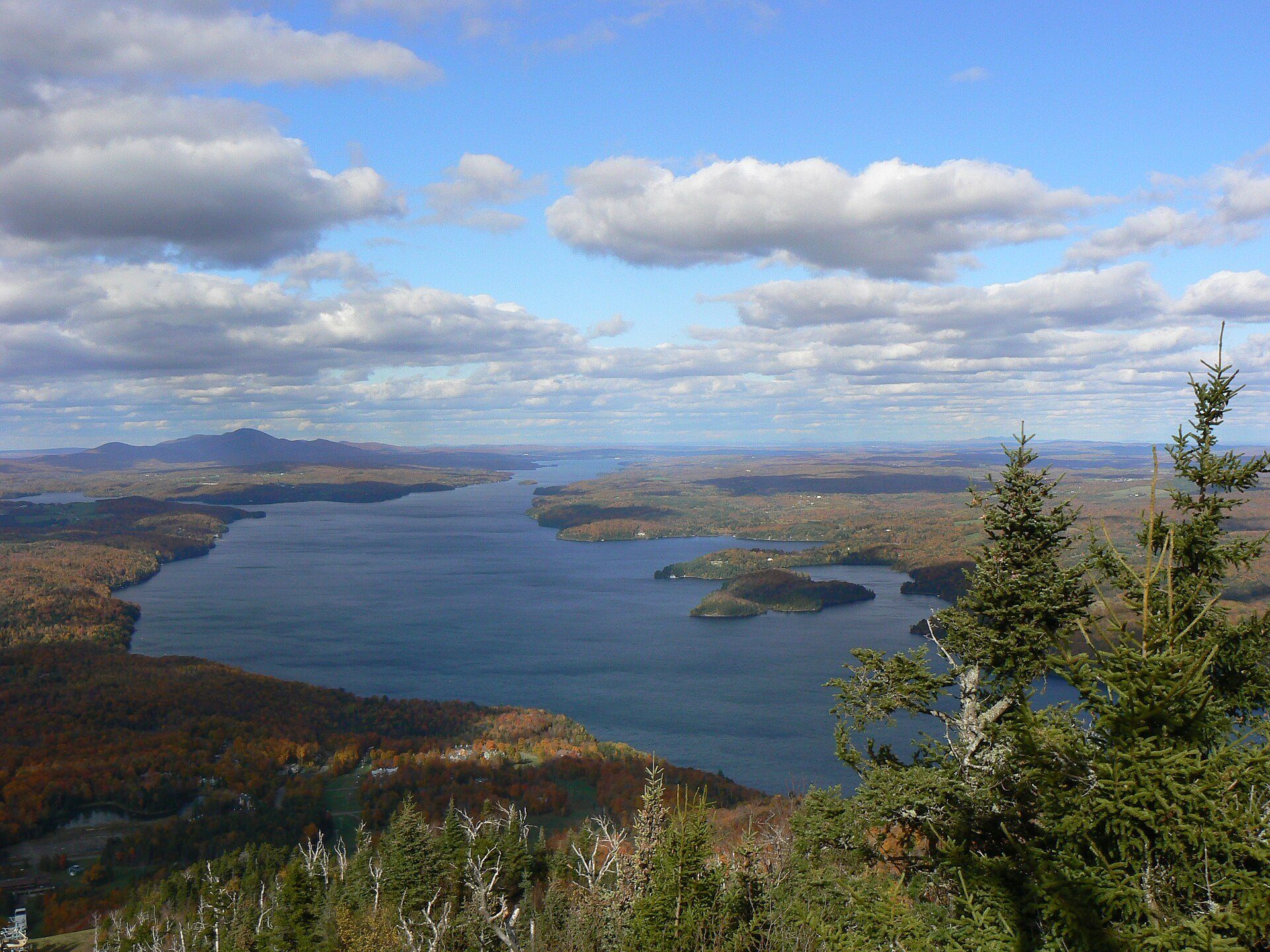
    Where: Magog sits at its northern tip; five other Quebec municipalities line its shores, as does Newport, Vermont. Three quarters of the lake’s surface is in Quebec, but 71% of its watershed is in Vermont.

    Size: 44 km long and 6 km wide, with an area of 95 to 102 km² depending on the source. Its deepest point, 107 m, lies beneath Owl’s Head mountain.

    On the water: 10 km/h within 100 m of shore and 70 km/h elsewhere (Transport Canada’s TP 15587), plus a few zones closed to all motors, including part of Magog Bay. Every boat must carry a valid wash certificate or user certificate, or face a $100 fine (MRC de Memphrémagog, 2024).

    Water quality: the lake isn’t part of the RSVL. Monitoring by the Quebec environment ministry and Memphrémagog Conservation rated it oligo-mesotrophic based on phosphorus from 1999 to 2018 (mesotrophic in its southern half based on chlorophyll), with phosphorus stable or slightly declining.

    Two caveats: cyanobacteria were reported from 2006 to 2018, and zebra mussels were identified in July 2018. About 175,000 Canadians drink its water.

    Access: on the Quebec side, six public beaches, five municipal boat launches and 27 marinas (2019), including Plage des Cantons and Plage de l’Ouest in Magog. No Sépaq park.

    Did you know? Legend has it that the lake monster Memphré lives in a cave beneath Owl’s Head, right above the lake’s deepest point. The Abenaki refused to swim there.

    Lake Massawippi: North Hatley’s deep lake

    Where: five municipalities, including North Hatley and Ayer’s Cliff, have managed the lake together since 2001. It’s 14.2 km long according to Ayer’s Cliff; sources put its area at 15 to 18.7 km² and its depth at 75 to 86 m.

    On the water: 70 km/h offshore, 10 km/h within 100 m of shore (TP 15587). Every boat, motorized or not, must be washed at an approved station, with fines of $400 or more.

    Water quality: oligo-mesotrophic transition in 2024 according to the RSVL, based on water clarity alone (about 5 m); the last full chemical analysis dates from 2014. Zebra mussels (2021) and Eurasian watermilfoil are present.

    Access: Plage Massawippi in Ayer’s Cliff is free and supervised (paid parking); North Hatley’s public beach charges admission. No Sépaq here: this is the Massawippi Regional Park.

    Did you know? Around 1886, a Baltimore doctor fell for the lake, and families from the American South followed by train. By 1903, North Hatley had 250 residents in winter… and 1,200 in summer. With its many artists, the village was nicknamed the “Athens of the North.”

    Brome Lake: Knowlton, its beach and its old villas

    Where: in the town of Lac-Brome (Knowlton, Foster), at the source of the Yamaska River. Wide but shallow: 14.57 to 15 km² depending on the source, 12.8 m at its deepest and 6.3 m on average.

    On the water: 10 km/h within 150 m of shore and of Eagle Island (TP 15587). Washing is mandatory before every launch, and the certificate expires after 24 hours or as soon as the boat leaves the lake.

    Water quality: mesotrophic in 2025 according to the RSVL (phosphorus 16 µg/l, clarity 3.8 m). Since 2006, cyanobacteria episodes, mostly in August and September, have sometimes closed Douglass Beach.

    Access: Douglass Beach is a supervised sandy beach where you can launch a non-motorized boat, but not a powerboat; the marina’s ramp charges a fee. No Sépaq park.

    Did you know? The Abenaki called the lake Yamaska. As early as 1867, many villas owned by wealthy Montrealers stood in Knowlton.

    Orford, Stukely and Fraser: the Mont-Orford lakes

    Mont-Orford National Park (Sépaq) was created in 1938 thanks to the efforts of 27 municipalities. Two of its sectors, Lac-Stukely and Lac-Fraser, sit on a lake, with supervised beaches, boat rentals and camping. The surprise: Lake Orford itself isn’t in the park.

    Lake Orford

    Shared by Eastman and Austin, it supplies Eastman’s drinking water: 1.29 km² and 48 m deep according to Wikipedia. It has three speed zones (5, 10 and 70 km/h) and was oligotrophic from 2022 to 2025 according to the RSVL, with average clarity of 7 m in 2025.

    At the rest area Eastman acquired in 2025, swimming and boat launching are prohibited.

    Lake Stukely

    Between Bonsecours, Eastman and Orford, partly in the park: about 4 km² and 32 m deep according to Wikipedia. Motorboats are increasingly common, and washing is mandatory. Oligotrophic from 2016 to 2024 according to the RSVL, it moved into the oligo-mesotrophic transition zone in 2025.

    Locals used to call it Lac Bonnallie, and Sépaq’s rental centre there is named Le Bonnallie.

    Lake Fraser

    In the Canton d’Orford, in the park’s Lac-Fraser sector. Speed is capped at 10 km/h, and towing a person or wakesurfing is only allowed during authorized hours. Oligo-mesotrophic transition in 2025 according to the RSVL (clarity 6 m).

    Long Pond (Bolton-Est): peace and quiet, no gas motors

    Where: it’s sometimes placed in Austin, but Long Pond (officially “Lac Long Pond”) lies entirely within Bolton-Est, in the MRC de Memphrémagog. A headwater lake, it drains into Lake Trousers, then into the Missisquoi Nord River.

    Size: 0.66 km², 2.7 km long and 11.5 m deep (about 5 m on average), according to the lake association. Its mostly forested watershed is 8.8 times the lake’s area: a low ratio, which favours good water quality.

    On the water: the lake is listed in Schedule 3 of Transport Canada’s TP 15587. All mechanical propulsion (gas, diesel) is prohibited, and electric motors are allowed up to 7.5 kW. Neighbouring Lake Trousers and Lake Nick follow the same rules: three lakes, zero gas motors.

    The rule dates back to the 1990s, when the lake association of the day had motors banned; people water-skied there at the time. Boat washing is mandatory (Bolton-Est by-law 2023-423) at the Missisquoi-Nord park station in Eastman, free for light craft.

    Water quality: in the oligo-mesotrophic transition zone every year from 2014 to 2025 according to the RSVL, except 2023 (mesotrophic). In 2025: phosphorus 8.8 µg/l, clarity 3.8 m.

    Access: no public access and no public boat launch, the Association du lac Long Pond confirms. The Bourgade du Lac Long isn’t a public park either: it’s a private residential domain on chemin Kates, managed by the Association des propriétaires de la Bourgade du Lac Long de Bolton-Est (founded in 2006). Its park is reserved for member owners.

    We actually have a house for sale on chemin Kates, in the Bourgade du Lac Long: see our featured property.

    Did you know? Near the lake, the Quebec Copper Mine produced 11,242 tonnes of copper, 3,000 ounces of gold and 30,000 ounces of silver between 1954 and 1958. The lake’s water is said to have stayed whitish until the early 1960s.

    Other lakes worth knowing

    Less famous or farther afield, these lakes are well worth a look too.

    Lake Magog

    Between Sherbrooke, Magog and Sainte-Catherine-de-Hatley: 10.8 km², 18.85 m deep, motors allowed. In 2025, the RSVL rated it mesotrophic or meso-eutrophic transition depending on the station; zebra mussels are present. Its Abenaki name, Namagw, means “at the lake trout.”

    Lake Lovering

    In Magog and the Canton de Stanstead: 4.9 km², 25 m deep, motors allowed, oligo-mesotrophic transition in 2025 according to the RSVL. Its boat launch, key required, is reserved for residents of both municipalities, and 83% of its shoreline is inhabited.

    Lake Bowker

    In the Canton d’Orford, very clear water: 10.9 m of average clarity in 2025. Oligotrophic that year according to the RSVL, it was ultra-oligotrophic in 2019, 2020, 2022 and 2023. Motors allowed (55 km/h). On maps from 1863 and 1884, it was called Long Lake.

    Lac d’Argent

    In Eastman: 1.02 km² and 15.6 m deep according to Wikipedia, oligo-mesotrophic transition in 2024 and 2025 according to the RSVL. Municipal parks line its shore, but swimming is prohibited at public access points for lack of supervision (2022). It was once called Lac Missisquoi, then Lac Eastman.

    Lake Brompton

    Between the Canton d’Orford, Racine and Saint-Denis-de-Brompton: 11.7 km², 42.4 m deep, oligotrophic in 2025 according to the RSVL. Motors allowed, with speed limits by sector. A surprising fact: part of the lake is land flooded by the Bombardier dam.

    Lake Mégantic

    In the MRC du Granit: 26.4 km², 75 m deep, the source of the Chaudière River, mesotrophic in 2024 and 2025 according to the RSVL. Motors allowed: 70 km/h by day, 55 km/h at night. Benedict Arnold’s troops used it as a route in 1775.

    Grand lac Saint-François

    The largest lake in this guide after Memphremagog: 51 km², shared by five municipalities, including Lambton and Adstock. Part of it lies in Frontenac National Park (Sépaq), which warns of strong winds and motorboats. Motors allowed; meso-eutrophic transition in 2025 according to the RSVL.

    Choinière Reservoir

    In Yamaska National Park (Sépaq): 4.56 to 4.75 km² depending on the source. Gas motors are prohibited and rental rowboats come with electric motors; meso-eutrophic transition in 2025 according to the RSVL. Formed during the 1977 spring thaw, it covers a former hamlet.

    Selby Lake

    In Dunham: 1.6 km² with more than 180 homes on its shores. A sticker is required to navigate, except on paddleboards and inflatables. Meso-eutrophic transition since 2020 according to the RSVL.

    Lake Aylmer

    A widening of the Saint-François River between Stratford, Disraeli, Beaulac-Garthby and Weedon: 33.3 km² and 35 m deep according to Wikipedia. Eutrophic from 2020 to 2022 according to the RSVL, it was mesotrophic in 2024 and 2025.

    Before buying near a lake: 5 questions to ask

    Every lake has its own rules. For a specific property, the municipality, your notary (in Quebec, notaries handle property transfers) and Transport Canada remain your references.

    1. Does the lake have public access, or is it private?

    Some lakes have none, like Long Pond; others reserve their launch for residents, like Lake Lovering. Check what comes with the address: an association park, an access right, or nothing at all.

    2. What are the motor and speed rules?

    They’re federal, published in Transport Canada’s TP 15587 and updated at least once a year. A lake with a 70 km/h limit and a lake reserved for electric motors offer very different experiences.

    3. Is boat washing mandatory?

    On several lakes in this guide, yes, sometimes even for a kayak. Fines run $100 on Memphremagog and $400 or more on Massawippi: the goal is to stop invasive species.

    4. What is the water quality, and which way is it trending?

    Look at several years of RSVL data, not just one: Brome Lake has alternated between two ratings since 2008, while Long Pond has almost always stayed in the same one. Ask about any history of cyanobacteria, too.

    5. Is there an association, with fees and shoreline rules?

    A lake association monitors water quality; in a private domain, it may require membership and fees, so ask how much and what they cover. Also check the municipal rules on the riparian buffer (the protected strip of shoreline vegetation) before you dream of a dock.

    On Long Pond, for example, only 57% of the shoreline was still natural in 1984; anglers planted 6,955 shrubs to bring it back.

    BEAU’s advice

    The right lake is the one that fits the way you live: a paddle at dawn, a family boat outing or total silence. Visit on a Saturday in July and again on a Tuesday in October, and ask these five questions before you sign a promise to purchase (Quebec’s term for an offer).

    Torn between two lakes? Write to Yanick or call him at (514) 358-3126. To hear about new properties that match your criteria, set up your real estate alerts.

    Sources

    Data consulted on November 7, 2026. Boating rules and lake conditions change: check with the municipality and Transport Canada before putting a boat in the water.

    Yanick Beaupertuis, residential and commercial real estate broker, BEAU L’Équipe immobilière, eXp Agence immobilière

    Photo: Kevstan, CC BY-SA 3.0, via Wikimedia Commons

    Before La Tanière, There Was the Haut Bois Normand

    On chemin George-Bonnallie, in Eastman, thousands of Eastern Townships families share the same memory.

    A sugar shack meal to the sound of a folk singer. A first zipline ride among the maples. A tube run down the hill on a Saturday in February.

    That place was the Haut Bois Normand. Today, it is called La Tanière.
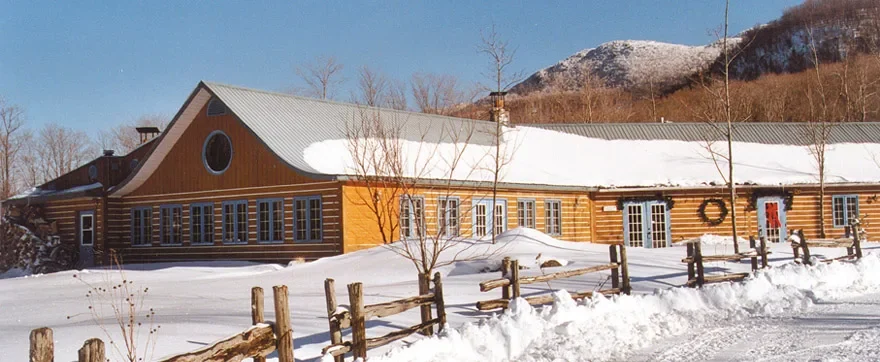
    The Cabane Haut Bois Normand in winter, in Eastman
    The Cabane Haut Bois Normand in winter. Photo: Haut Bois Normand archives.

    A family that arrived in 1917

    In 1917, François Normand and Marie-Élise Lavoie settled on a farm in Eastman. He was a former ship captain, born on Île-aux-Grues.

    Their family home stands on chemin George-Bonnallie. The couple would have 15 children. In 2017, the family celebrated its centennial in Eastman with more than 130 descendants.

    Among the family’s achievements was the Sucrerie des Normand. It would become the Haut Bois Normand, a name the family came up with.

    Sugaring season, the Normand way

    Every spring, the sugar shack welcomed families into its rustic dining hall.

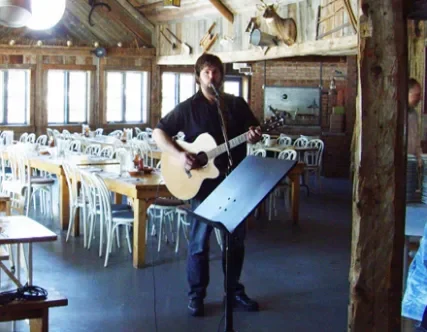
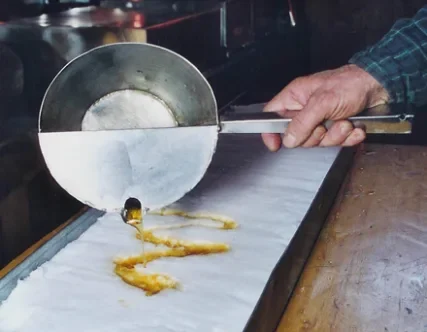
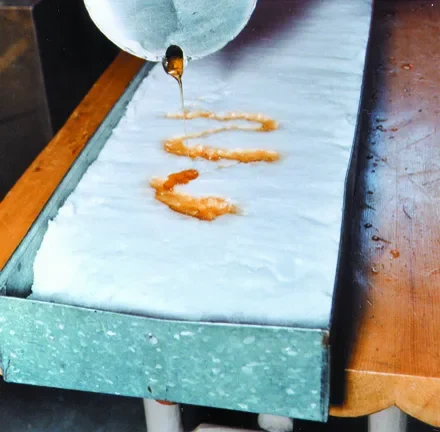
    On the program: the folk singer, maple taffy on snow and sleigh rides through the sugar bush. And on the menu, an omelette made “the Normand way.”

    In 2014, an Inode Estrie article described a tradition served for more than three generations.

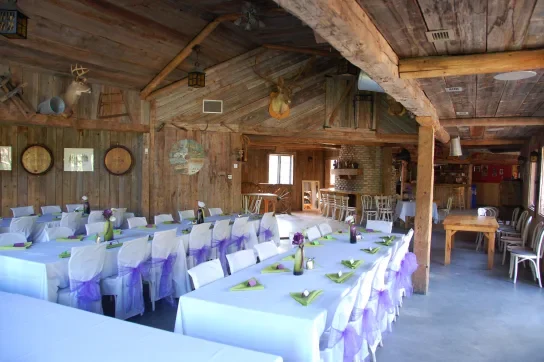
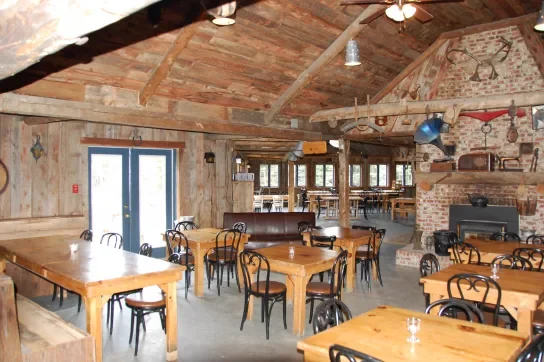
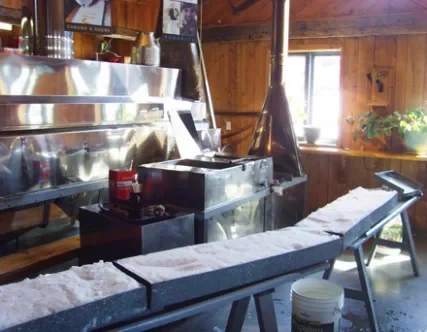
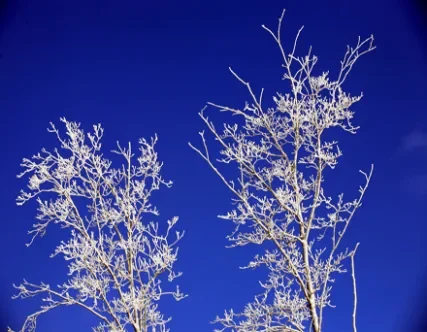
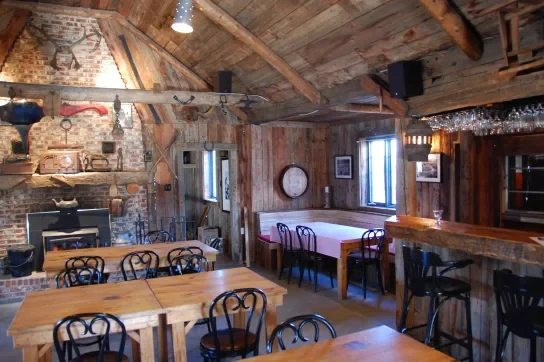
    The great hall of the Haut Bois Normand sugar shack, set for a mealThe dining room of the Haut Bois Normand sugar shackThe folk singer in the hall of the Haut Bois Normand sugar shackMaple taffy at the Cabane Haut Bois NormandMaple taffy on snow at the Cabane Haut Bois NormandMaple taffy served on snow at the Haut Bois NormandThe Haut Bois Normand sugar shack under the snowFrost-covered maples at the Haut Bois NormandA memory from the Haut Bois Normand sugar shack

    Sugaring season at the Haut Bois Normand. Photos: Haut Bois Normand archives.

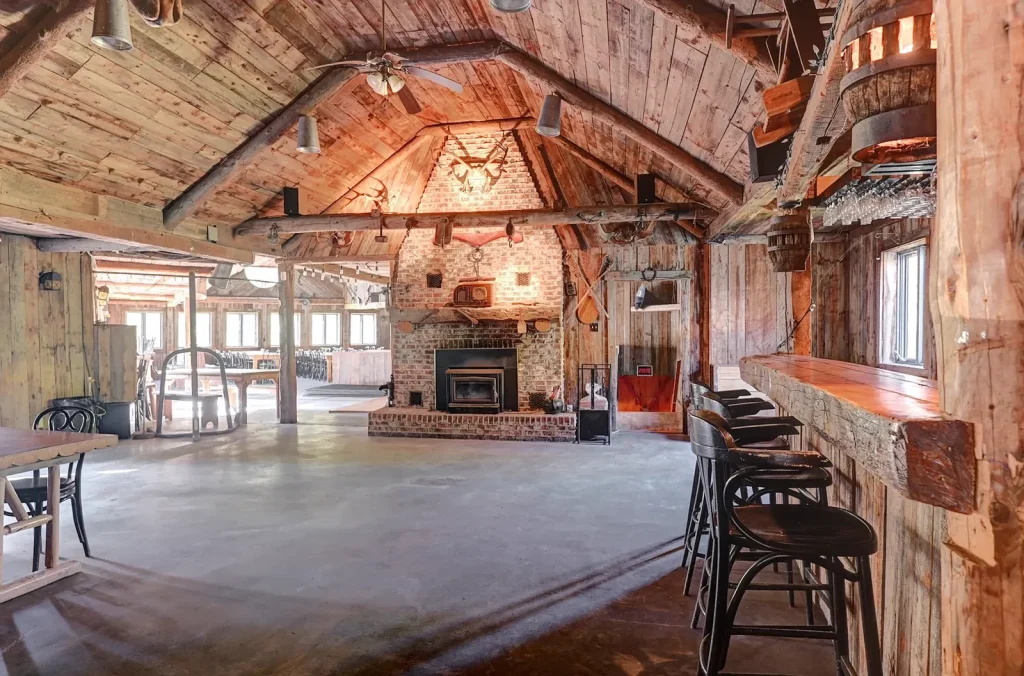
    The great wooden hall and its fireplace, in the former Haut Bois Normand sugar shack, in Eastman
    The same great hall and its fireplace, today.

    Up in the treetops

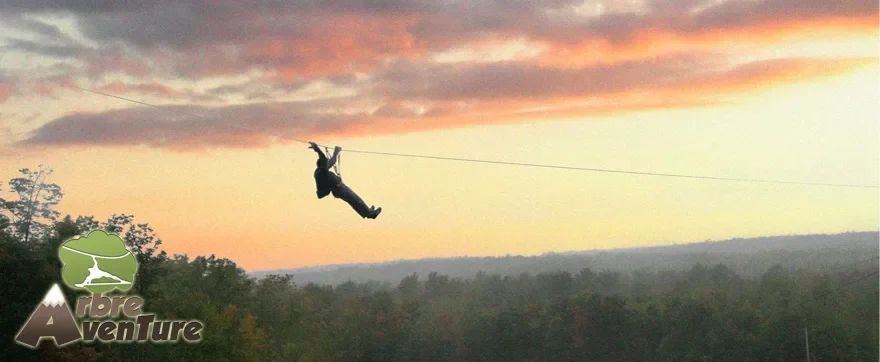
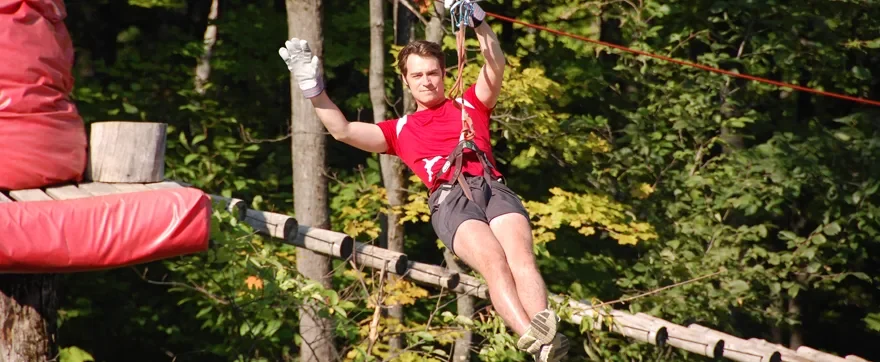
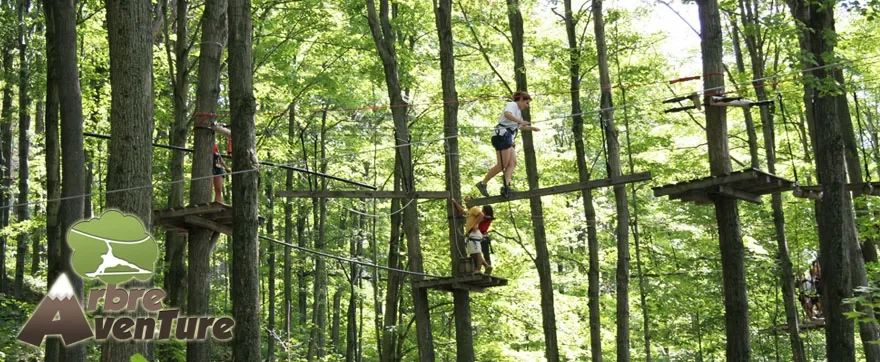
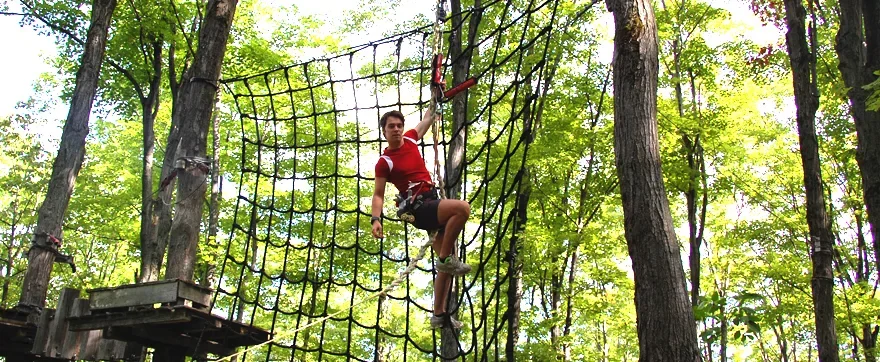
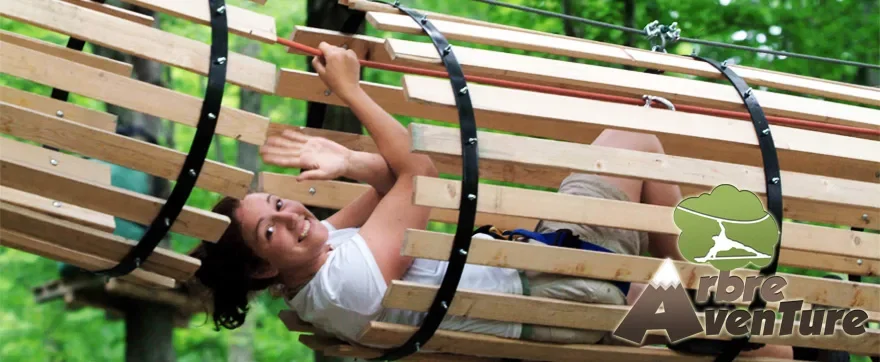
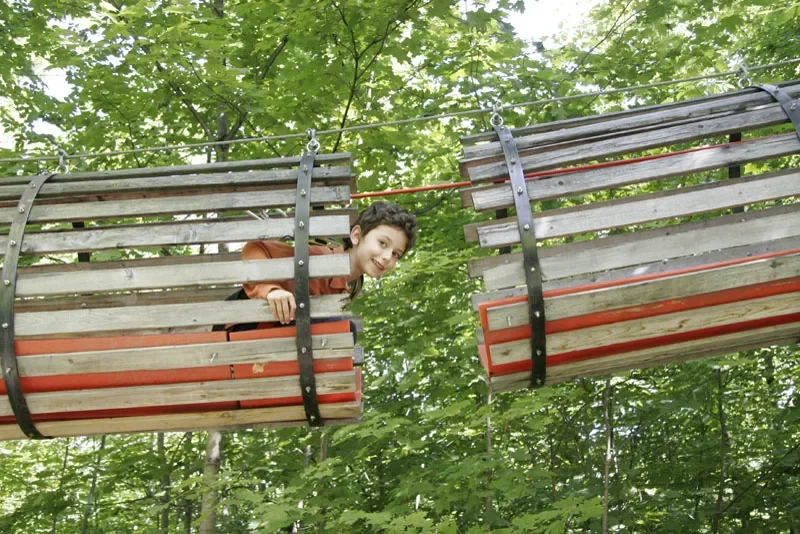
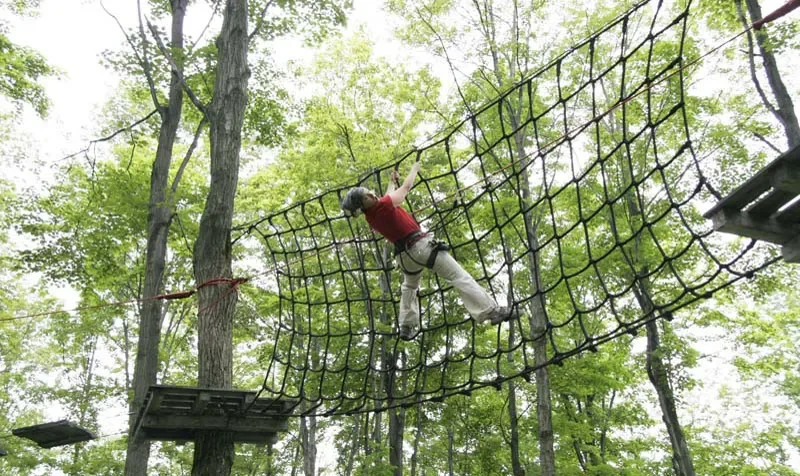
    By 2004 at the latest, the sugar bush could also be explored from above. The Normands themselves built the Arbre Aventure treetop adventure courses: suspended bridges, nets, ziplines.

    In its 2004 season alone, the business reported more than 15,000 admissions.

    In 2008, a via ferrata was added on the mountainside. Later, four large ziplines offered more than a kilometre of descent.

    A zipline at sunset, Arbre Aventure, Haut Bois Normand, Eastman
    A zipline at sunset, above the sugar bush.
    A suspended bridge in the trees, Arbre Aventure, Haut Bois NormandA treetop adventure course in the Haut Bois Normand sugar bushThe net of an Arbre Aventure course, Haut Bois NormandThe suspended barrels of Arbre Aventure, Haut Bois Normand
    A young climber on the Petit Tarzan course, Arbre AventureA treetop walk, Arbre Aventure, Haut Bois Normand
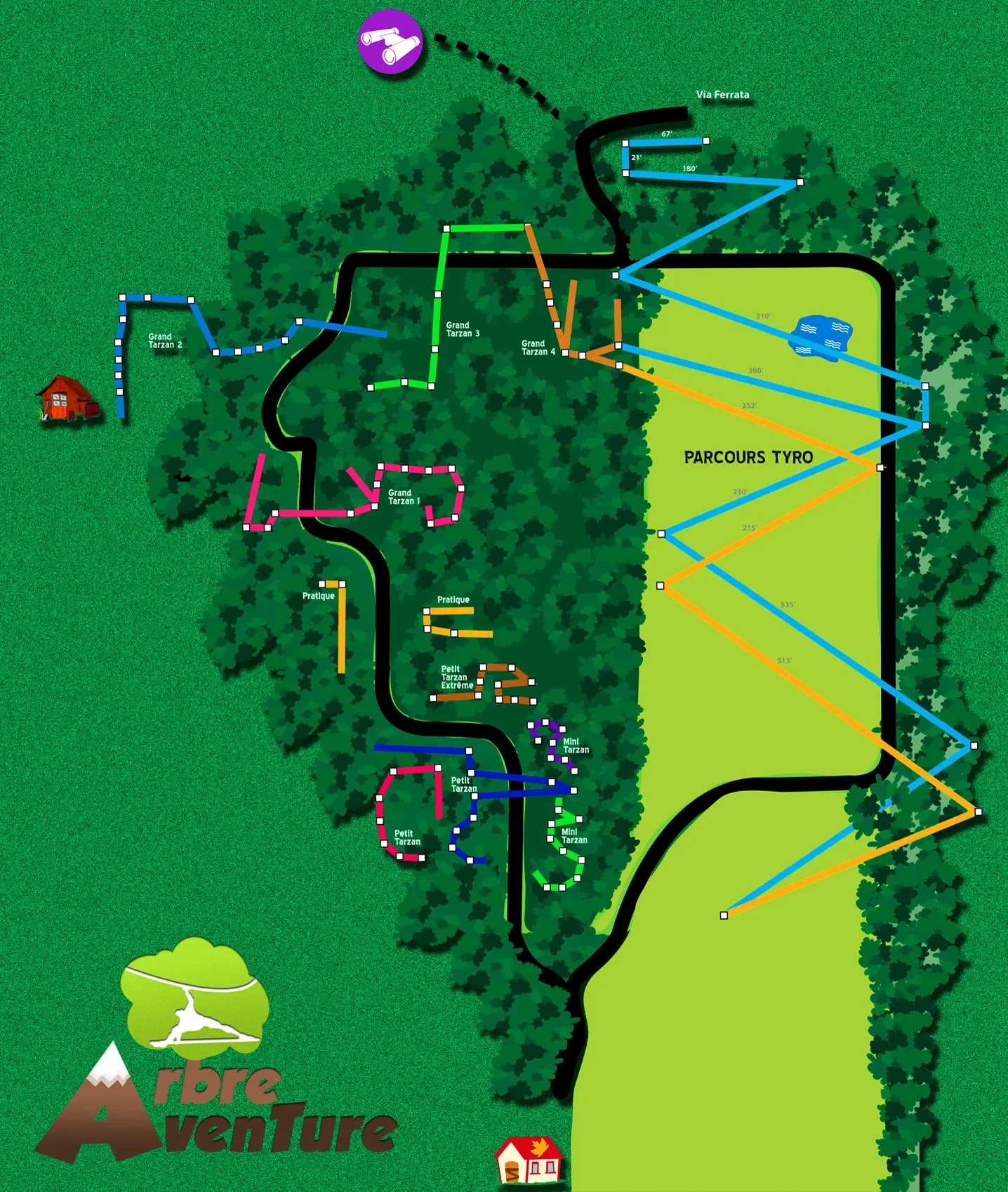
    The map of the Arbre Aventure courses at the Haut Bois Normand
    The map of the Arbre Aventure courses.

    Arbre Aventure at the Haut Bois Normand. Photos: Haut Bois Normand archives.

    Winter, by tube

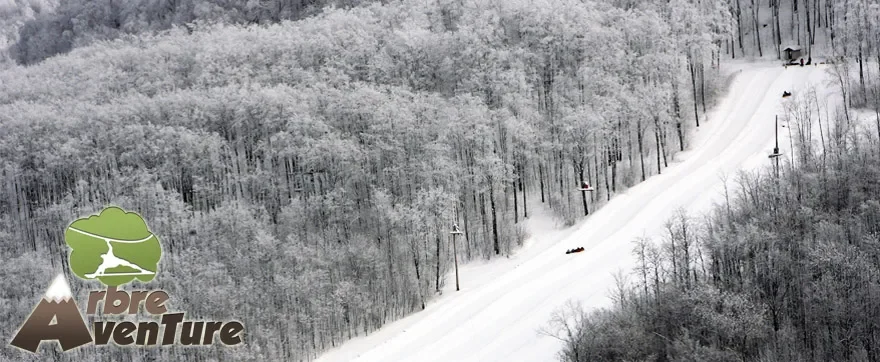
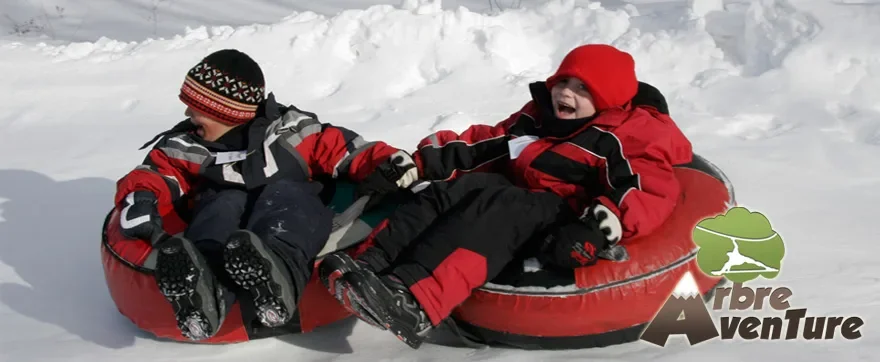
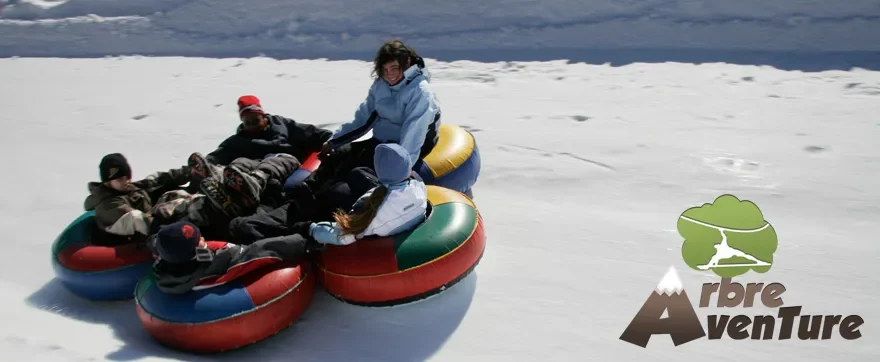
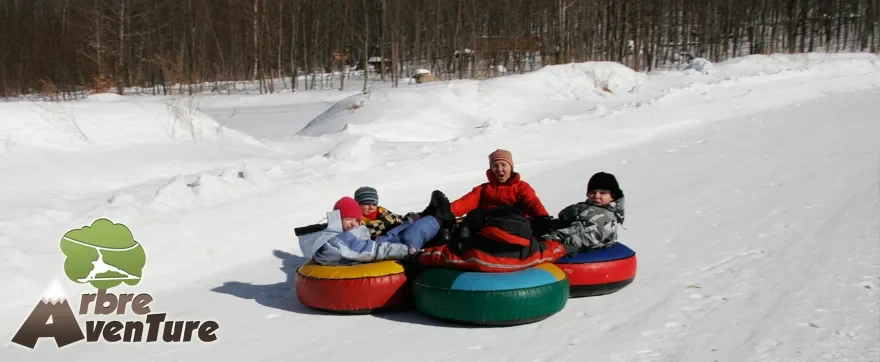
    When the snow arrived, the mountain changed games. Four 1,500-foot runs, a heated lift and, starting in the winter of 2008-2009, snow made on site.

    Schools and businesses held their outings there. Families spent their weekends there.

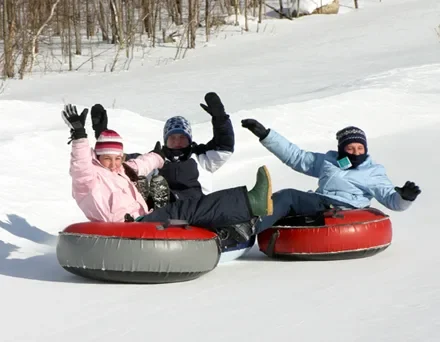
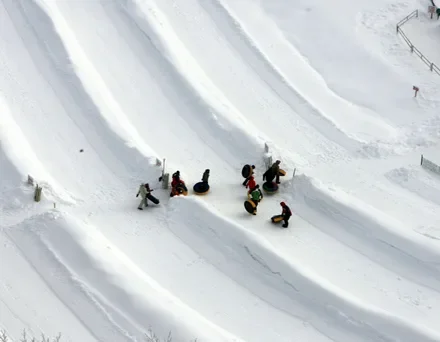
    The snow-covered tubing runs of the Haut Bois NormandA tube run at the Haut Bois NormandA family tube run at the Haut Bois NormandA group tube run at the Haut Bois Normand
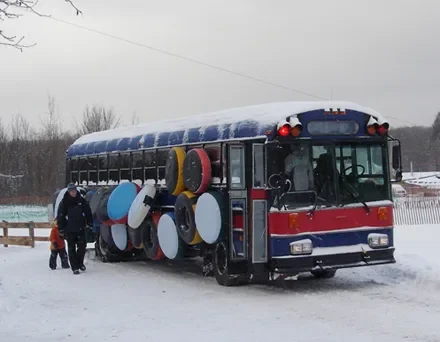
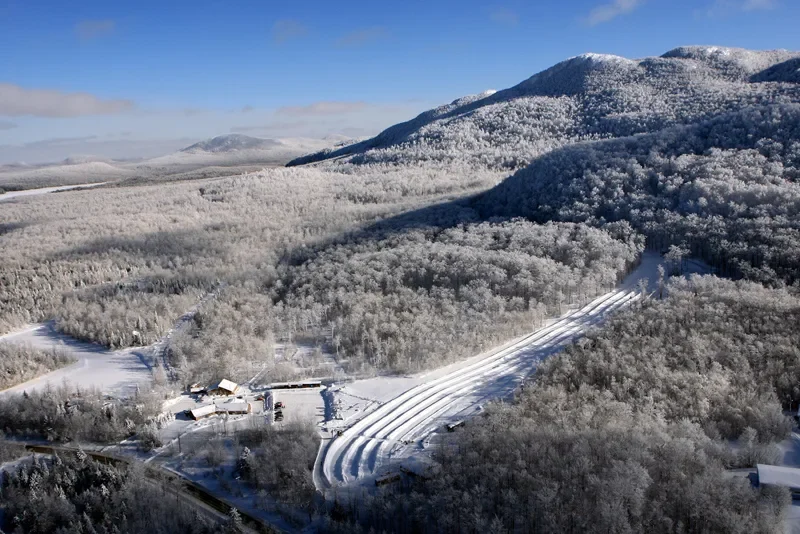
    The heated bus of the Haut Bois Normand tubing runsSmiles at the bottom of the Haut Bois Normand slidesThe tubing runs of the Haut Bois NormandThe Haut Bois Normand slides and the view over the Eastern Townships

    The tubing runs, and their famous heated bus. Photos: Haut Bois Normand archives.

    The sugar shack, the treetop courses, the slides: everything was built by the Normands.

    The Blond family, then a pause

    In 2012, the Blond family took over the Normand estate, along with everything the Normands had built.

    The sugar shack, the courses and the slides continued to welcome young and old.

    In July 2020, Le Reflet du Lac was still recommending the sugar bush for its sugar shack meals. Activities stopped shortly before the current owners arrived in 2021. Today, the sugar shack is closed for restoration.

    The Cabane Haut Bois Normand in summer, in Eastman
    The Cabane Haut Bois Normand in summer. Photo: Haut Bois Normand archives.
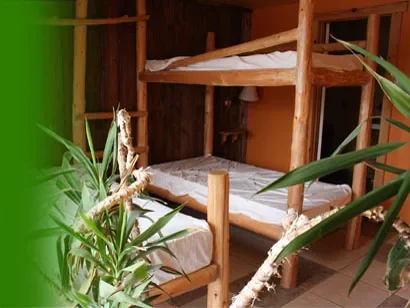
    The Haut Bois Normand log inn in winterThe Haut Bois Normand log innThe Haut Bois Normand log inn in summerThe front of the Haut Bois Normand log innInside the Haut Bois Normand inn

    The estate’s log inn. Photos: Haut Bois Normand archives.

    The chalet on the neighbouring lake, in the Haut Bois Normand daysThe chalet and the neighbouring lake, in the Haut Bois Normand daysThe chalet on the neighbouring lake, seen from the side, in the Haut Bois Normand daysThe living room of the chalet on the neighbouring lake, in the Haut Bois Normand days

    The lakeside chalet, in the Haut Bois Normand days. The chalet at 9 chemin Lily-Butters and the neighbouring lake are listed separately (Centris 27362476) and are also available with La Tanière. Photos: Haut Bois Normand archives.
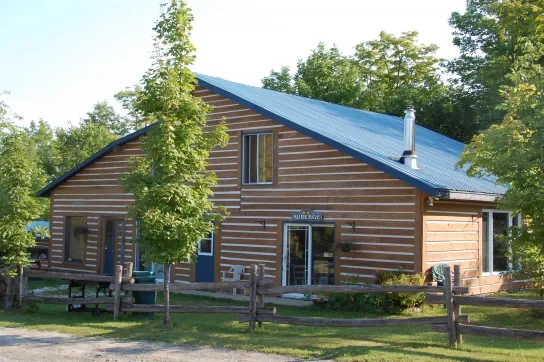
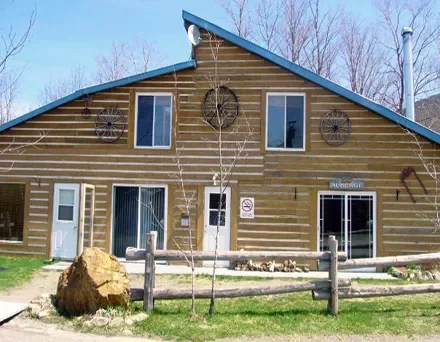
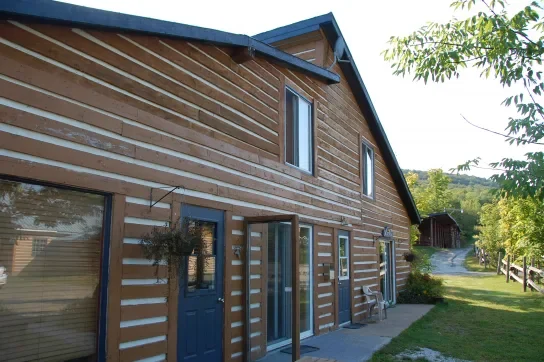
    Today: La Tanière

    The estate is now called La Tanière. More than 130 acres on the north slope of Mont Orford.
    The great hall of wood and stone is still there, with its fireplace. All around, the mature forest that has welcomed thousands of visitors.
    ThenThe Haut Bois Normand estate seen from a helicopter, in winter
    The Haut Bois Normand seen from a helicopter. Photo: Haut Bois Normand archives.
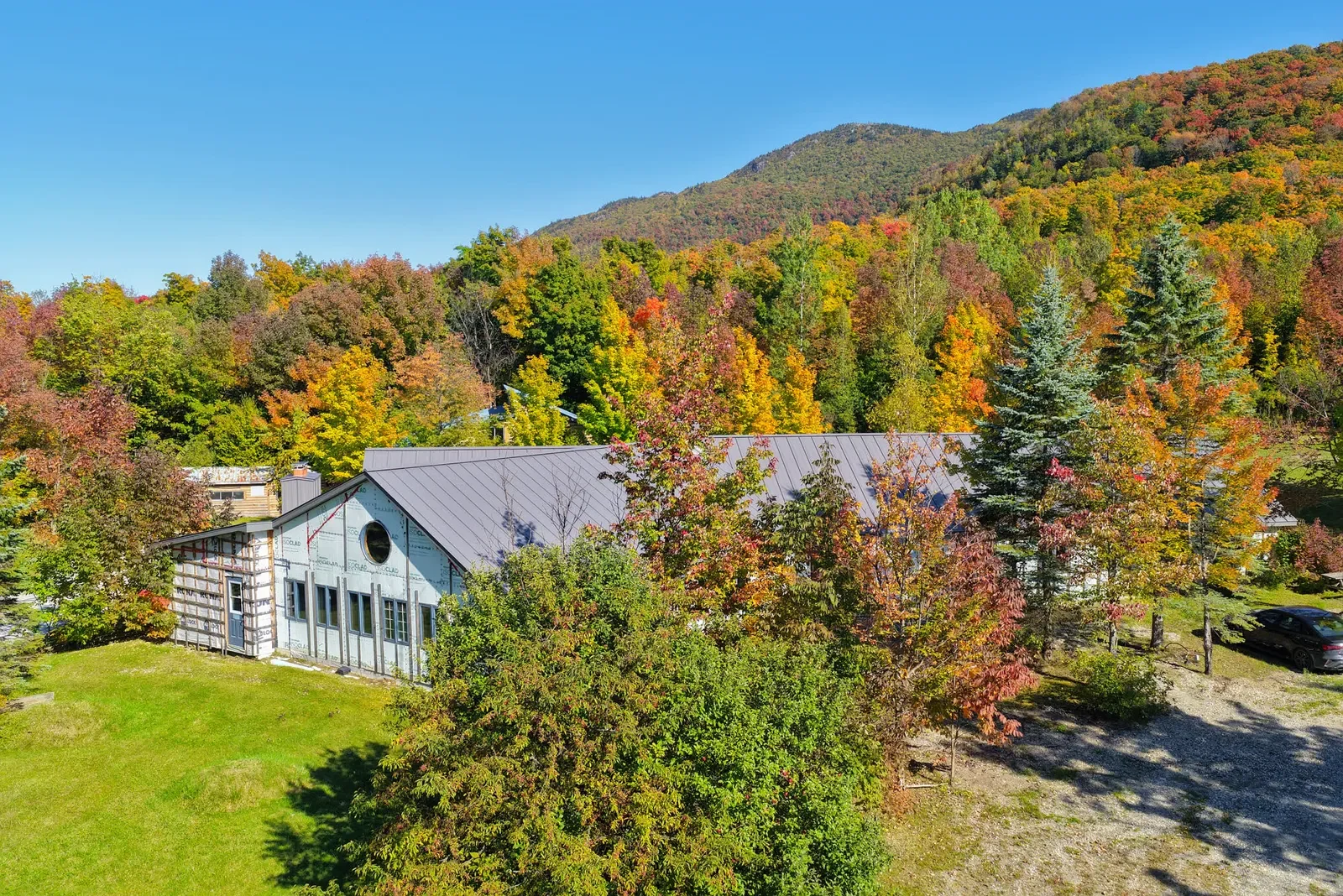
    TodayAerial view of the La Tanière estate, the former Haut Bois Normand, and Mont Orford, in Eastman
    La Tanière and Mont Orford, in the fall of 2026.
    The front of the former Haut Bois Normand sugar shack, in Eastman
    The former sugar shack, as it waits for its next story.

    A page of Eastern Townships history is waiting for its next family.

    Do you have a memory of the Haut Bois Normand?

    A photo of your first sugar shack outing, your first zipline or a tube run?

    Write to us at info@beauimmobilier.ca. With your permission, we would love to add your memories to this story.

    La Tanière · Eastman · Centris 17659805

    The estate is for sale

    More than 130 acres on the north slope of Mont Orford, with the former Cabane Haut Bois Normand, 15 minutes from Magog and Orford.

    Sources, consulted on October 25, 2026: Le Reflet du Lac (Patrick Trudeau, September 22, 2017; Dany Jacques, July 4, 2020); archived Haut Bois Normand and Arbre Aventure websites, 2004 to 2015 (Wayback Machine); Inode Estrie, Université de Sherbrooke (March 21, 2014); Commission de toponymie du Québec. Facts confirmed with the current owners. Archive photos: Haut Bois Normand (former websites of the business and of Arbre Aventure). Current photos: La Tanière, 2026.

    La Tanière is listed by Yanick Beaupertuis, residential and commercial real estate broker · BEAU The Real Estate Team · eXp Agence immobilière · Centris No. 17659805

    Magog Real Estate Market: Q3 2026 Report

    In Q3 2026 (July to September), Magog recorded 108 residential sales, 2% more than a year earlier, and the median price of a single-family home reached $614,000 (+14%), according to the APCIQ barometer via the Centris system. Homes are selling faster than a year ago, supply is growing, and above $860,000 the Magog market leans toward buyers.

    How many properties sold in Magog this summer?

    From July to September 2026, 108 residential properties sold in Magog (+2%), for a total volume of $75.6 million (+21%). Single-family homes lead the way: 83 sales in the quarter, 17% more than a year earlier. Condos are slowing down: 19 sales in the quarter and 88 over the last 12 months, down 21%.

    On the supply side, 169 new listings came on the market (+18%) and 233 properties were active listings at the end of the quarter (+9%).

    Are prices still rising in the Memphrémagog area?

    Yes, for single-family homes. In Magog, the median price reached $614,000 in Q3 (+14%) and $570,000 over the last 12 months (+6%). Over five years, the median single-family price there has risen 69%.

    Around the lake, over the last four quarters (October 2025 to September 2026):

    Area Residential sales Median single-family price Year-over-year change
    Magog 400 (-6%) $570,000 +6%
    Orford 142 (0%) $719,562 +16%
    Potton (Mansonville, Owl’s Head) 63 (+6%) $741,687 +38%
    Eastman 56 (-6%) $735,625 0%
    Austin 48 (-25%) $701,187 +5%
    Estrie (region) 5,989 (0%) $477,500 +7%

    Magog: APCIQ barometer for Q3 2026 (last 12 months). Other areas: Centris statistics by municipality, last four quarters, consulted on October 6, 2026.

    A word of caution about Potton: the 38% increase rests on 55 single-family sales in one year. With so few transactions, a handful of luxury sales is enough to move the median.

    Condos, meanwhile, are treading water in Magog: a median price of $336,500 over the last 12 months (0%). In Orford, the median condo reached $399,187 (+10%).

    Is it a good time to sell in Magog?

    For a home under $860,000, yes: conditions remain favourable to sellers. Over the 12 months ending in September 2026, it took 2.2 to 6.7 months to sell off the inventory of single-family homes below that price. Under 8 months of inventory, the APCIQ calls it a seller’s market; above 10 months, a buyer’s market.

    Single-family homes in Magog, by price range Months of inventory Market conditions
    Under $290,000 6.7 Seller’s
    $290,000 to $430,000 2.2 Seller’s
    $430,000 to $710,000 3.0 Seller’s
    $710,000 to $860,000 6.5 Seller’s
    $860,000 and up 12.3 Buyer’s

    Above $860,000, it is the opposite: 12.3 months of inventory, which makes it a buyer’s market. That is precisely the segment of waterfront and resort properties. Condos followed the same path over the summer: according to the barometer’s market conditions chart, they moved from a balanced market to a buyer’s market.

    Speed confirms the trend. A single-family home sold in 34 days on average in Magog in Q3, 13 days faster than a year earlier. A condo took 93 days on average over the last 12 months, 24 days longer.

    In short: a well-located, well-priced home sells quickly. A condo or a high-end property calls for a precise pricing strategy from the very first week.

    What about Sherbrooke, the Estrie region and Québec?

    In the Sherbrooke census metropolitan area, which includes Magog, Q3 was busy: 569 residential sales (+12%) and a median single-family price of $490,750 (+7%). In Sherbrooke itself, 373 sales (+15%) and a median single-family price of $450,494 (+4%). In the outlying area, which includes Orford, North Hatley and Compton, the median single-family home reached $652,500 (+21%).

    The Estrie region recorded 1,476 residential sales in Q3 (+9%), with a median single-family price of $490,000 (+8%). Across Québec, September 2026 was calmer: 7,045 sales (-7%) and 45,185 active listings (+23%).

    Will interest rates move?

    The Bank of Canada held its policy rate at 2.25% on September 2, 2026; its next announcement was scheduled for October 28. According to the barometer’s dashboard, the 5-year mortgage rate stood at 6.09% in Q3 (unchanged over one year) and the 1-year rate at 5.49% (0.60 points lower).

    BEAU’s advice

    Under $860,000, a home in Magog is on the right side of the market: prepare it well and list it at the right price from day one. Above that, or for a condo, buyers have time to compare, and the quality of the marketing makes the difference. Want to know where your property stands? Request your evaluation or talk to a broker at BEAU The Real Estate Team.

    Frequently asked questions

    What is the median price of a house in Magog in 2026?

    In Q3 2026, the median price of a single-family home in Magog was $614,000, up 14% over one year. Over the last 12 months, it was $570,000 (+6%), according to the APCIQ via the Centris system.

    How long does it take to sell a house in Magog?

    In Q3 2026, a single-family home sold in 34 days on average. A condo took 93 days on average over the last 12 months.

    Does the Magog market favour buyers or sellers?

    Sellers, for homes under $860,000 (2.2 to 6.7 months of inventory). Above that price, buyers, with 12.3 months of inventory (12 months ending in September 2026).

    Sources

    The statistics presented describe the market as a whole and do not reflect the value of any particular property. To find out the market value of your property, ask a real estate broker for a comparative market analysis.

    Yanick Beaupertuis, residential and commercial real estate broker · BEAU The Real Estate Team · eXp Agence immobilière

    Photo: BEAU The Real Estate Team

    Living in Magog or Orford: How to Choose?

    Magog and Orford sit side by side, share the same lake and the same mountain, and yet daily life is not the same in each. One is a real town on the shores of Lake Memphremagog; the other is a wooded township at the foot of Mont Orford and its national park. If you are torn between the two, here is what sets them apart day to day, and what to look at before you buy.

    Two neighbours, two rhythms

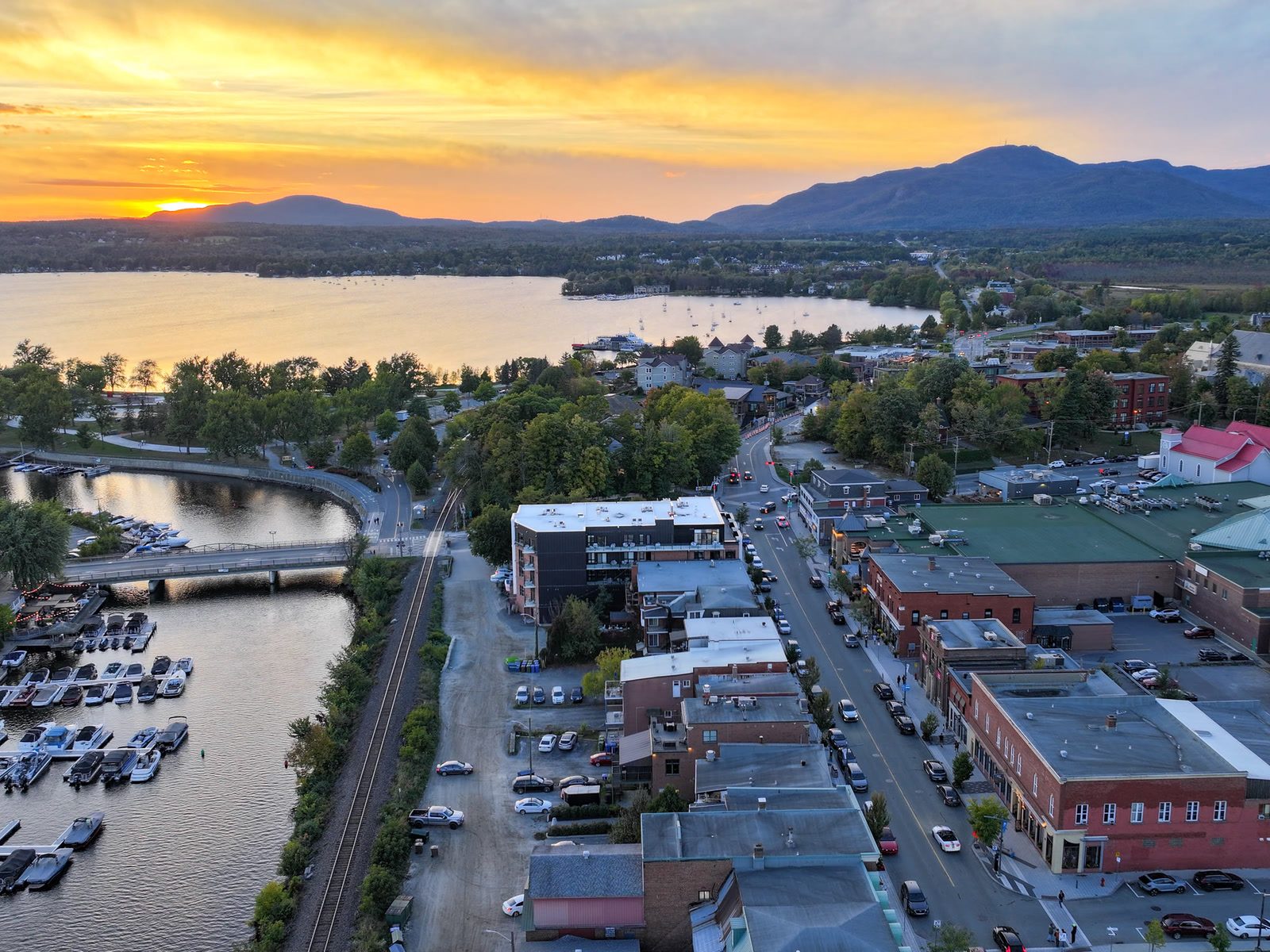
    People often mix them up, but they are two separate municipalities in the Memphrémagog RCM. Both are the same distance from Montréal, a little over 1 h 30 via Highway 10, and about thirty minutes from Sherbrooke. What changes is the everyday setting: the lake and rue Principale in Magog, the forest and the trails in Orford.

    Magog Orford
    Population (2021 census) 28,312 residents 5,007 residents
    Signature Lake Memphremagog and its downtown Mont Orford and the national park
    Hospital with emergency room In town In Magog, less than 10 minutes away
    High school École de La Ruche (and Princess Elizabeth, an English elementary school) In Magog
    Everyday life Shops and services within walking distance Cherry River area and chemin du Parc; the rest by car
    Typical properties Condos near the bay, neighbourhood homes, waterfront properties, rural land Resort condos and homes, chalets in the forest, homes on the mountainside

    Magog: the lake and town life

    Magog is the full-service town of the Eastern Townships. You will find the hospital and the CLSC on rue Saint-Patrice Est, several elementary schools and École de La Ruche high school, grocery stores, restaurants and a lively rue Principale. The lake is part of everyday life: Plage des Cantons, the Pointe Merry promenade, and the cruises that reveal Mont Orford and Mont Owl’s Head. Le Vieux Clocher and the Musée international d’art naïf keep the town lively all year round.

    It is the right choice if you want to do almost everything on foot, if you have school-age children, or if you want to live by the water without giving up services.

    Orford: the mountain and the national park

    Orford means the outdoors at your door. Mont-Orford National Park, run by Sépaq, offers the beaches of Lac Stukely and Lac Fraser, the Sentier des Crêtes, cross-country skiing and mountain biking. The Mont-Orford ski resort sits at the heart of the park, and two golf courses round out the offer. In summer, Orford Musique, founded in 1951, presents its concerts at Salle Gilles-Lefebvre.

    The township is more wooded and more spread out: a good share of its properties are second homes, and for the hospital, the high school or a large grocery store, you head down to Magog. It is the right choice if the mountain and the quiet come before walking to the café.

    Real estate: what to look at on each side

    In Magog, the value of an address depends mostly on the view of the lake or Mont Orford, access to the water and proximity to downtown. In Orford, it depends on the mountain view, proximity to the national park and quick access to Highway 10.

    Before you make a promise to purchase, a few checks make all the difference:

    • Winter access: the slope of the driveway, road maintenance (municipal or private) and the real driving time to services.
    • Services: municipal water and sewer, or a well and septic system, which are more common in wooded areas.
    • Short-term rentals: each municipality regulates them in its own way. Check the zoning, the condominium bylaws and the required registration before buying with that plan in mind.
    • Waterfront: the shoreline buffer strip, lake access rights and the dock.
    • Condominiums: the declaration of co-ownership, the minutes, the contingency fund and its study.

    Who is Magog for? Who is Orford for?

    • A family with school-age children: Magog, for the schools, the hospital and nearby activities.
    • An active retired couple: both. Magog for walkable neighbourhood life, Orford for golf, trails and quiet.
    • A remote worker: both, as long as you check the Internet connection at the address you have in mind, especially in wooded areas.
    • A weekend chalet: Orford, at the foot of the slopes, or a condo near Magog’s bay.

    BEAU’s advice

    Visit both on a Tuesday evening in November, not just on a Saturday in July. It is outside the high season that you see the true rhythm of an area: who lives there, what stays open, what winter is like. And talk it over with a broker who knows both sides of the mountain: we will help you find the one that suits you.

    Frequently asked questions

    Are Orford and Magog the same town?

    No. They are two separate, neighbouring municipalities in the Memphrémagog RCM. They do share some events, such as the Magog-Orford wine harvest festival (Fête des vendanges).

    Where are the hospital and the high schools?

    In Magog. The hospital, which has an emergency room, and the CLSC are at 50 rue Saint-Patrice Est. From most parts of Orford, it is less than 10 minutes away.

    Which area should I choose for a chalet?

    For skiing and trails, Orford, near the resort and the national park. For the lake and town life, a condo or a house near Magog’s bay.

    Still undecided? Discover Magog, discover Orford, set up your real estate alerts or talk to a broker at BEAU The Real Estate Team. Thinking of selling? Request your free home evaluation.

    Photo: Mario Hains, CC BY-SA 3.0, via Wikimedia Commons

    Contact us

    Toll-free: (833) 299-BEAU(2328)

    Email : info@beauimmobilier.ca

    Office information

    EXP REAL ESTATE AGENCY
    Real Estate Agency
    1111, boul. Dr.-Frederick-Philips #601,
    Saint-Laurent QC H4M 2X6

    BEAU THE REAL ESTATE TEAM
    Office
    5125, chemin du Parc, apt. 333,
    Orford QC J1X 7N9

    Stay connected